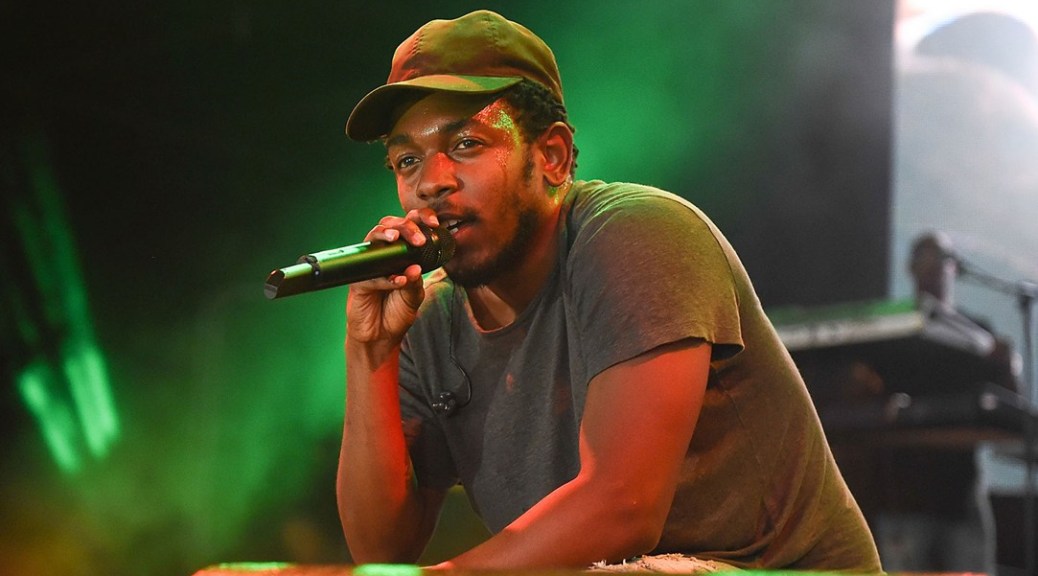
Illmatic or It Was Written? Ready to Die or Life After Death? Slim Shady LP or Marshall Mathers LP? Food & Liquor or The Cool? good kid, m.A.A.d city or To Pimp a Butterfly?
The prophecy has been foretold, and foretold, and foretold. The savior, who drops two classics, then disappoints us, and if he’s truly the savior, makes up for it in the long run (see: Nas). But I’m not going to postulate about the future for Kendrick, instead lets appreciate what this particular prodigy has done. When I first heard To Pimp a Butterfly I was positive it was better than GKMC. This was what I had been waiting for, where parts of GKMC left me yearning for just a little more, I now felt satisfied.
TPAB is not an album you can taste in one sip, or even one glass. It requires intensive, diligent and repeated consumption. You will change your mind again, and again, and again, about elements of it. Second albums by the prodigious rap star are always sprawling attempts to recapture the spirit of the first, while proving that they can do even better. They usually lash out at a force bigger than themselves and puff out their chest at anyone trying to tell them anything. This is where Kendrick separates himself. Where most have taken this moment to give the world an angst-y middle finger and stomp up their gorgeous marble spiral staircase and slam their heavy double doors, Kendrick only blames himself. With armor-piercing self-awareness, he blames himself for even the possibility that fame and wealth has changed him, for even the potential for him to be corrupted. It’s a bleak but cautionary parable from a future self, sent to forewarn of the self-loathing guilt that will await him should he betray Compton. Don’t play the victim, be responsible for “U” he infers; this is a common theme throughout.
After a year full of #BlackLivesMatter and #ICantBreath you’d think Kendrick would aim some, if not most, of his fire-breathing passion at institutional racism on his 16 track, hour-plus slam poetry funk record. But somehow he didn’t. It’s perplexing at best, and irresponsible at worst. Okay, to be fair there is “The Blacker the Berry”. But it’s hard to tell how much of that anger is aimed at himself, and how much is at the system that “hates him” when he begins and ends the song with calling himself a hypocrite. His stream-of-consciousness flow wrestles with issues of black self-love and hypocrisy throughout the album. Symbolically, on “i” he addresses the importance self-esteem, and then when the dramatized live crowd causes a ruckus he lectures them about the word “nigga”. It’s clumsy, but it’s also about perspective. About when you’re in the heat of the moment, step back and see the bigger picture. Where GKMC weaved its way through the nooks and crannies of the city, TPAB weaves through the psyche of young Kendrick like a parasitic epiphany; an epiphany that is heavily centered on Black unity and cultural appreciation.
 Continue reading A Month After Its Release, We Grapple with TPAB’s Place
 The Post-Academy