Tag Archives: Film

What Does Beasts Of No Nation Mean?

Netflix’s big splash into original films is a movie about the loss of innocence 

There are a lot of ways this could be answered, particularly because there are a lot of ways it could be asked. What Netflix’s first bonafide Oscar launch attempt means for the future of film distribution, for opportunistic auteurs, or for big studios and multiplexes. A lot of that is boring and almost all of it is speculative. Online streaming sites and apps will only be able to create more and more quality TV and films for the foreseeable future; that much we know. Beasts alternative release plan of simultaneous theatrical and online release was enough of a rebellion from status quo for major U.S. theatre chains such as AMC and Regal to boycott the film. Thus, the $6 million dollar film made less than $60,000 at the box office – but that pain is eased by the reported $12 million Netflix forked over for distribution rights. It’s hard to say how much of, if at all, a thorn in the side of Hollywood this trend could be. Frankly, I don’t actually care. On the other hand, Beasts of No Nation may be the shot that’s ending a cinematic cold war.

Beasts director, writer, co-producer, and cinematographer Cary Fukunaga, who you may remember as the director of that one good season of True Detective (ahh, memories), has a knack for gorgeous images. In fact, most of his resume is work as cinematographer on short films and documentaries. So it comes as no surprise that Beasts of No Nation is a hearty buffet of vividly colored frames. In those frames is, most notably Idris Elba, as the ‘Commandant’ of the rebel militia that captures our young Agu (played by Ghanian actor Abraham Attah) after his father and brother are killed trying to escape the government troops. Elba’s Commandant assumes Agu’s father’s figure as he shapes him into one of the many child-warriors in his battalion. Agu is conditioned with violence and brainwashed with wartime rhetoric. He witnesses unspeakable cruelty and is the victim of heinous acts. Through these ordeals we begin to understand the lust for killing brewing in these children as a natural reaction to trauma. After his Commandant who he had begun to trust and admire, sexually assaults Agu, squeezing a trigger and screaming feels almost therapeutic. This is the films greatest triumph; humanizing the warped mind. Screen Shot 2015-10-20 at 12.11.12 PM
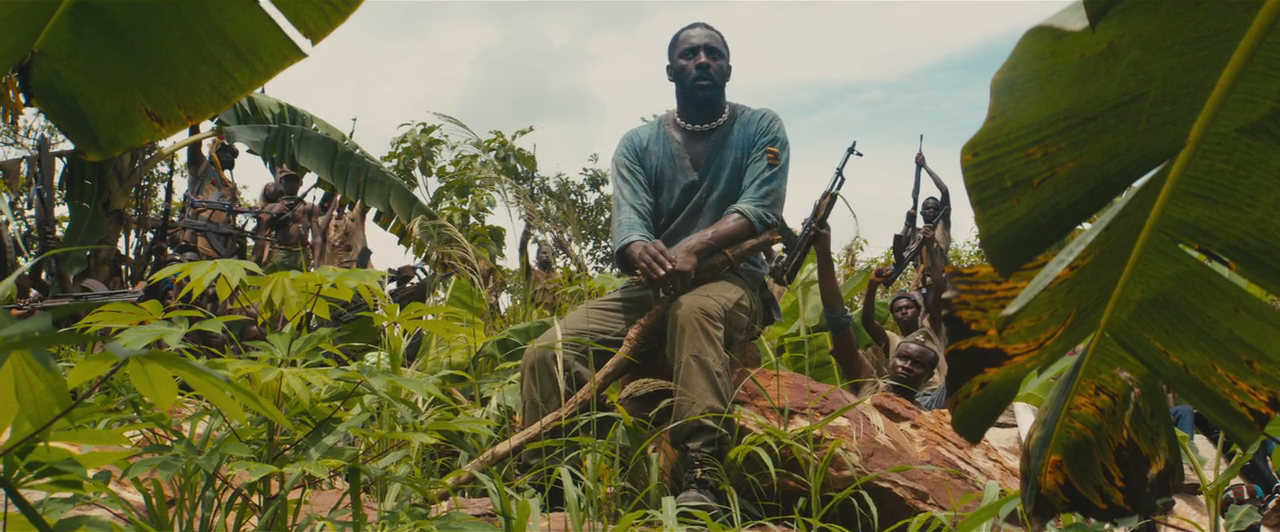
Beasts location in Africa is kept completely anonymous and despite criticism for it painting Africa with a violent generalization, artistically it’s a very defendable move. The anonymity helps immerse us in Agu’s innocent perspective. To a child it matters not what sovereign nation they are in or fighting. They have no choice or say in the matter and are more or less blind to politics. What matters to them is simply surviving, family, and happiness. Even the grass and fauna is well above Agu’s head, it makes sense that his perspective of the war would not be greater. The lack of context for the atrocities creates a vacuum of nihilism for there is no purpose, only victims.
Continue reading What Does Beasts Of No Nation Mean?

Everest, The Martian, and When Films About Risk Play It Safe

Visual spectacle can’t overcome lack of substance in Hollywood’s last gasp of summer

Recently I spent a better part of September meandering about France with my girlfriend (humble-brag or just normal brag?). Pristine Alps, ancient ruins, feats of architecture – you name it, it was beheld. However, I’ve never been a big ‘sights’ guy. This is because, as someone who lives within an average work commute to one of the Seven Natural Wonders of the World, I believe you can and will become numb to any ‘sight’s’ beauty if exposed long enough. I know, cynical right? But just ask the people of Agra what they think of the Taj Mahal, or Chicagoans about the Cloud Gate (the bean thing). But what’s not cynical is the belief that absorption into a person, an idea, or a culture, is endless and endlessly more stimulating. Something, director Baltasar Kormákur would appear not to believe while making Everest.

Everest is a film about a mountain, but the story is about people – a lot of people. Based on Jon Krakauer’s best-selling account of the 1996 Mount Everest Disaster, Into Thin Air, Everest stars, well, a lot of stars. Jason Clarke appears to be the lead as he plays the New Zealand-bred Rob Hall, leader of Adventure Consultants, one of the groups tasked with escorting their climbing clients up to the top of the world. Josh Brolin, John Hawkes, and Michael Kelly – as journalist Krakauer – among others, take up roles as Adventure Consultant’s clients. Opposite Clarke is Jake Gyllenhaal as the resident shirtless and super-chilled-out-brah ski-bum, but also Scott Fischer, leader of the Mountain Madness adventure travel service. Emily Watson and Sam Worthington reside back at one of the many base camps relaying messages for a better part of the film, while Keira Knightley and Robin Wright play worried wife half-a-world-away for Clarke and Brolin respectively.

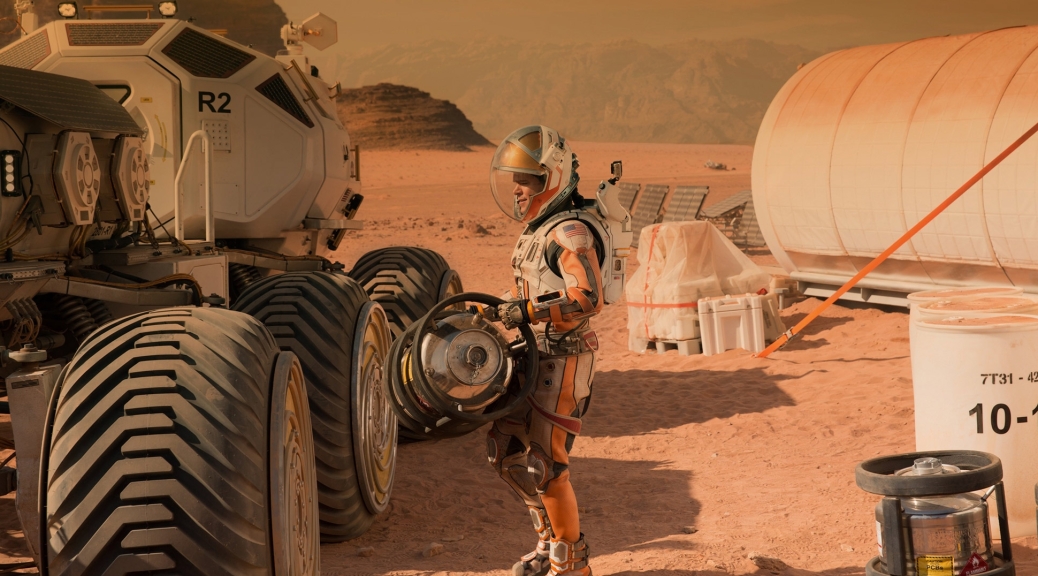
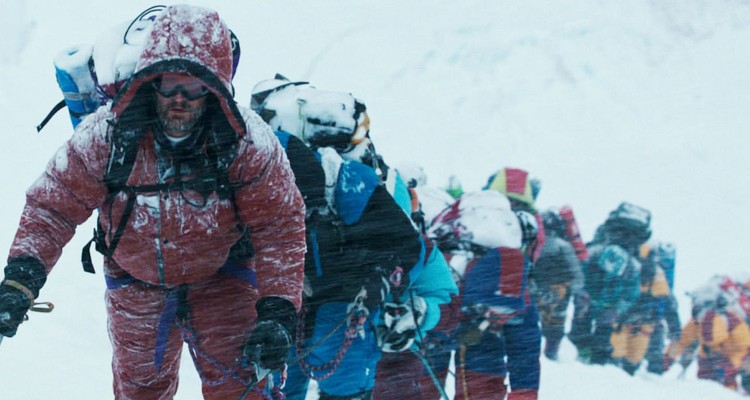
Grand Himalayan eye-candy is strewn about Everest, intercutting each new dramatization and pandering to 3D technology. It’s gorgeous and daunting, and helps to put in perspective the scale of such a venture. As our teams make their way from base camp to base camp acclimating to the altitude, we learn bits about where they’re from and why they’re here. What we don’t learn however is who they are. Characters are sketched haphazardly, defining them by their periphery relationships instead of delving into their psyche through dialogue and actions. Instead of zeroing in on a select few characters, the film casts a wide net, trying to give everyone their moments and their stories. As we ascend up the mountain, through the haze of snow blindness, goggles, and full-body snowsuits, keeping up with the large ensemble becomes confusing. The film’s flurrying attempt to include everyone casts a disorienting vibe over the second half of the film. This results in a lack of genuine emotional investment and participation from the audience. It’s also told from no particular perspective. Not using author and journalist Jon Krakauer’s point of view more, played by the instantly likable and relatable Michael Kelly, feels like a missed opportunity. The film slowly begins to feel like a mic’d up nature doc. everest-movie-review-1-750x400

Continue reading Everest, The Martian, and When Films About Risk Play It Safe

I Watched the Original Mad Max So That You Don’t Have To

Most Americans upon seeing a 15-second commercial for some new dirt-storm, four-wheeled, perhaps racing? or escaping? gaudy, kinda scary-lookin’, possibly Charlize Theron starring? summer blockbuster movie titled Mad Max: Fury Road, shouldn’t be blamed for sighing “Is this a Death Race thing?” or “More Fast and the Furious rip-offs huh?” Even I, upon just a brief Wikipedia browsing, realized I had much to learn about this Somewhat-peeved Maximilian.

For instance, there are already two sequels to the original Mad Max (1979): Mad Max 2: Road Warrior(1981)(presumably Weekend Warrior was taken) and Mad Max Beyond Thunderdome(1985)(all-time great ’80s action movie title).  In addition, these are Australian films, not American films set in Australia but filmed in a place in Arizona that looks kinda like Australia.  American audiences slurped up these V8 movies and helped make them a lot of Dingos, or whatever they call money down there; nonetheless, they were shot in Australia, by an Australian director, with an Australian cast.

A clean-cut, unemotive Mel Gibson plays Max (Mel grew up in Westchester County, New York until the age of 12 when he moved to Sydney). That’s right, a baby-faced Mel, unaware of the evils of The Jews and presumably unenchanted with the violence of the Christ. Mel is so innocent looking in this film, that it’s almost hard to imagine him developing into the unhinged monster we see today. But in retrospect, his strangely aloof and sometimes awkward performance in this movie now seems like a red flag for ‘Insane Person Inside Syndrome.’

Nevertheless, I watched the very first Mad Max. And I must say, time has not done it any favors.  It didn’t do itself any favors either, with a meandering plot, seemingly disjointed scenes, chaotic pacing, and just fucking strange acting. I say strange acting because some of these scenes include such bizarre facial expressions that it’s hard for me to imagine a director allowing them if it wasn’t for some comedic or surreal effect. But by far the most egregiously improbable element of this movie is how everyone just willingly wears leather pants in the heat of the Australian Outback, I mean c’mon. The whole film felt like an uncomfortable acid trip inside of a Hot Wheels play-set. But I digress, I’m going to give you the viewer’s digest of this film, to spare you.


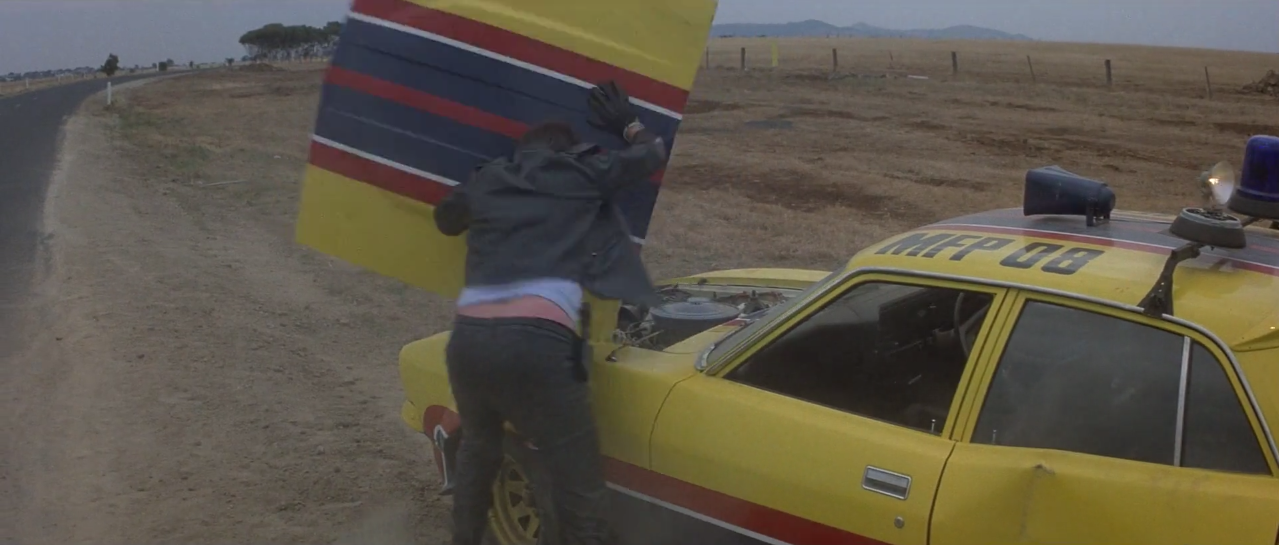
4:48 – Big surprise, the film starts off with a car chase. One of the Main Force Patrol (these are the good guys) aka The Police in dystopian Australia, spins out. Chubby cop kicks his fucked-up hood and tosses it on the ground in frustration, like a child. This is what I imagine parallel universe Dukes of Hazzard is like.Screen Shot 2015-05-13 at 2.53.32 PMThey’re chasing a guy called “Nightrider” (no, not that Knight Rider) who is maniacally laughing as he drives with his pink-haired, Hot-Topic girlfriend alongside him.

Continue reading I Watched the Original Mad Max So That You Don’t Have To

The Belated, But Pre-Oscars, Top 10 Films of 2014

1. Birdman or (The Unexpected Virtue of Ignorance)

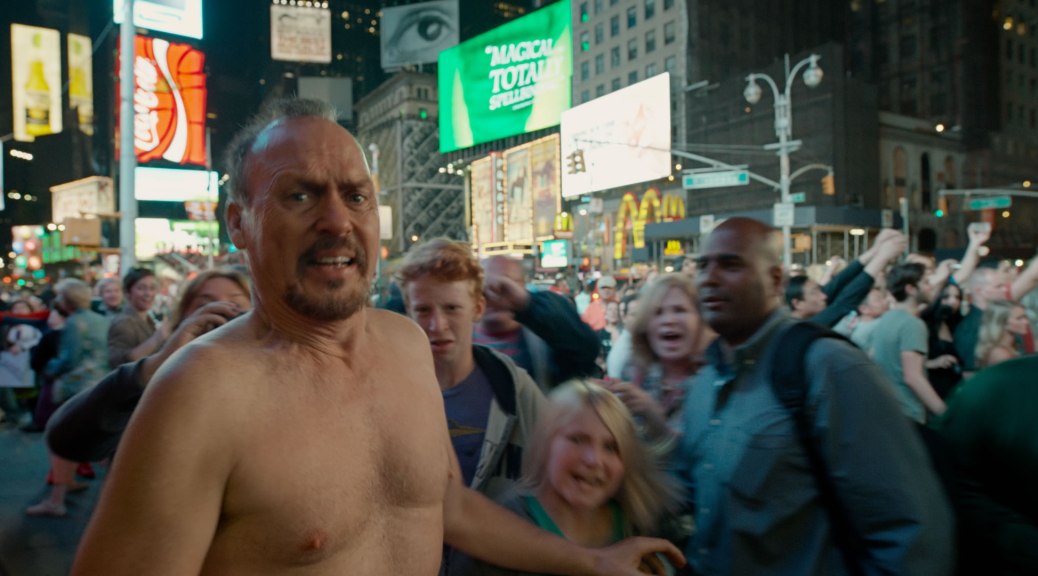
Birdman opens with a levitating cross-legged Riggan Thompson (Michael Keaton) being heckled by the Luciferian voice of his former role as Birdman. Throughout the film, Birdman revisits Riggan, stroking his ego and egging him on to return to his superhero form. “You tower over these theater douchebags. You’re a movie star… You are a god.” All the while Riggan is determined to validate himself as an actor—as an artist—with his Broadway production, an adaptation of Raymond Carver’s What We Talk About When We Talk About Love. Riggan is not only the star of the production but also the director and the writer.

When a stage light falls on the key supporting actor’s head, Riggan is forced to re-cast. He rattles off a list of Hollywood stars to his agent Jake (Zach Galifianakis); Jeremy Renner? He’s an Avenger. Fassbender? Doing X-Men. Each proposed substitute is involved in the same buttered-popcorn-franchise-blockbusters that cast a shadow on Riggan’s life. That’s when revered thespian Mike Shiner, played ferociously by Edward Norton, appears. If Birdman is the preacher of fame and worship, Shiner is the pope of artistic integrity. Shiner is a method actor who drinks real gin during a dinner scene, and attempts to have actual sex with Lesley (Naomi Watts) during a bedroom scene, all in front of a live audience. Emblematically, without an audience Shiner is impotent. All the world’s a stage, right?

The war between reality and fantasy has been waged. Alone, Riggan performs feats of levitation and telekinesis. Sending lamps and shelves crashing with a flick of his wrist, soaring through the New York cityscape, and even blowing up a car as he walks by. Birdman is a surrealist painting begging you to believe it’s real. And you may give in. Director Alejandro González Iñárritu leaves conflicting clues whether Riggan really possesses superpowers and what is really real. Conspicuous shots of fiery objects streaking through the atmosphere, the film’s score physically manifesting itself, and powers becoming moot once a peer enters the room. It’s a profoundly funny bending of meta-reality, but it’s also subtle when it needs to be. The concept is kept at bay, playing a supporting role to Riggan’s struggle with redemption and relevancy in both the art and the family he fell in love with. He struggles to mend familial relationships between his ex-wife Sylvia (Amy Ryan) and his fresh-out-of-rehab daughter Sam (who is also his assistant, played fearlessly by Emma Stone) that his former Hollywood ego left bruised and neglected. With Birdman Iñárritu manages to grasp at tangible themes like self-acceptance and relevancy and turn them into a lucid, trippy tour-de-force. This is hard to imagine coming from a director known for exhausting non-linear opacity and bleak meditations. Not to mention, it’s so god damn funny! Where has this guy been?! At one point alter ego Birdman taunts, “People, they love blood. They love action. Not this talky, depressing, philosophical bullshit.” You get it.

Continue reading The Belated, But Pre-Oscars, Top 10 Films of 2014

With The Dust Settled, American Sniper Finds Itself In No Man’s Land

Sniper leaves a parable of reactionism in its wake

For the past few weeks, no matter what part of the country you’re from, America has been under attack. We’ve endured a blitzkrieg of mortar-launched articles, think-pieces, tweets, op-eds, Facebook posts, TV rants, reactions, and even challenges, leaving a hazy fog of opinions to settle on the nation. On one side we have the ever-present “war is some badass shit” party. Opposite them resides the up-and-coming “war is like, not chill” party. For every bold countryman who took a shot at American Sniper and its drawling hero, an equally courageous samaritan recoiled and fired back in the reactionary way that one does when a stranger says something about your mother. It was clear there was no common ground to be seen, well, except for the film itself. Have you guys seen the film?

[Gasping for air as I snap out of pun-induced blackout] Ok. Give Clint Eastwood credit for creating a patriotic Iraq War movie that isn’t necessarily pro-war, but not too much credit. Eastwood shies away from making it a wholly anti-war film, and what could have been a damning portrayal of post-9/11 American foreign policy. Instead he articulates Chris Kyle’s red, white, and blue ‘true’ story in shades of grey.

First of all, taking political statements from troops should never be your first choice. I understand there’s a utility to having a first-hand account, but their heads are largely slathered with propaganda. They also are taught a strict adherence to whatever an unseen disciplinary chain of command tells them. These men are not geopolitical analysts; they are soldiers. But that’s neither here nor there; because forming political opinions based on this film is very odd anyway considering it seems deliberately apolitical. There isn’t one mention of the phrase ‘Iraq war’, ‘weapons of mass destruction’, or ‘Saddam Hussein’ and I believe I only heard ‘terrorist’ once. There isn’t a shot of a TV with pundits debating the legitimacy of said war either. Yet, we do see Kyle watching the news as it reports of the 1998 U.S. Embassy bombings in eastern Africa. After seeing this, Kyle enlists in the U.S. Navy looking to “be of service.” The next time we see a TV it’s September 11th, and Kyle and his newly married wife are visibly distraught. Kyle is sent to Iraq immediately after. That’s where it gets tricky.

It’s easy to say that Eastwood is being irresponsible by implying that the invasion of Iraq had anything to do with 9/11. But the truth of the matter is that, for better or worse, this tale is 100% from Chris Kyle’s perspective. Kyle enlisted without an attack on American soil even occurring, so it’s easy to assume he couldn’t have cared less if Saddam Hussein was hiding WMD’s under his totalitarian ‘stache. It was America time. War o’clock. Gun hour? Whatever. It’s a film adaptation of an autobiography, and Eastwood takes that very literally. ‘Don’t shoot the messenger’, Clint says (for the first time in his life). All complaints regarding humanitarian faux pas are to be forwarded to the residence of Mr. Christopher Kyle, punk.

Continue reading With The Dust Settled, American Sniper Finds Itself In No Man’s Land