Tag Archives: Featured

What Does Beasts Of No Nation Mean?

Netflix’s big splash into original films is a movie about the loss of innocence 

There are a lot of ways this could be answered, particularly because there are a lot of ways it could be asked. What Netflix’s first bonafide Oscar launch attempt means for the future of film distribution, for opportunistic auteurs, or for big studios and multiplexes. A lot of that is boring and almost all of it is speculative. Online streaming sites and apps will only be able to create more and more quality TV and films for the foreseeable future; that much we know. Beasts alternative release plan of simultaneous theatrical and online release was enough of a rebellion from status quo for major U.S. theatre chains such as AMC and Regal to boycott the film. Thus, the $6 million dollar film made less than $60,000 at the box office – but that pain is eased by the reported $12 million Netflix forked over for distribution rights. It’s hard to say how much of, if at all, a thorn in the side of Hollywood this trend could be. Frankly, I don’t actually care. On the other hand, Beasts of No Nation may be the shot that’s ending a cinematic cold war.

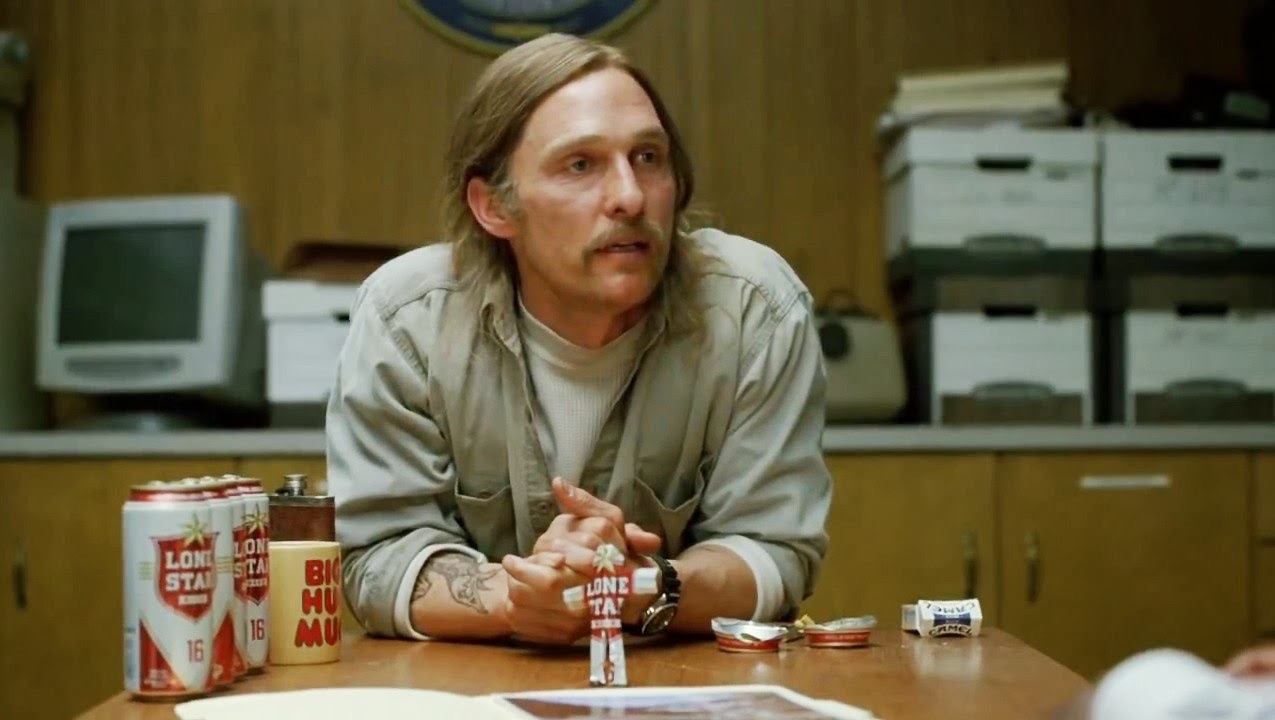
Beasts director, writer, co-producer, and cinematographer Cary Fukunaga, who you may remember as the director of that one good season of True Detective (ahh, memories), has a knack for gorgeous images. In fact, most of his resume is work as cinematographer on short films and documentaries. So it comes as no surprise that Beasts of No Nation is a hearty buffet of vividly colored frames. In those frames is, most notably Idris Elba, as the ‘Commandant’ of the rebel militia that captures our young Agu (played by Ghanian actor Abraham Attah) after his father and brother are killed trying to escape the government troops. Elba’s Commandant assumes Agu’s father’s figure as he shapes him into one of the many child-warriors in his battalion. Agu is conditioned with violence and brainwashed with wartime rhetoric. He witnesses unspeakable cruelty and is the victim of heinous acts. Through these ordeals we begin to understand the lust for killing brewing in these children as a natural reaction to trauma. After his Commandant who he had begun to trust and admire, sexually assaults Agu, squeezing a trigger and screaming feels almost therapeutic. This is the films greatest triumph; humanizing the warped mind. Screen Shot 2015-10-20 at 12.11.12 PM
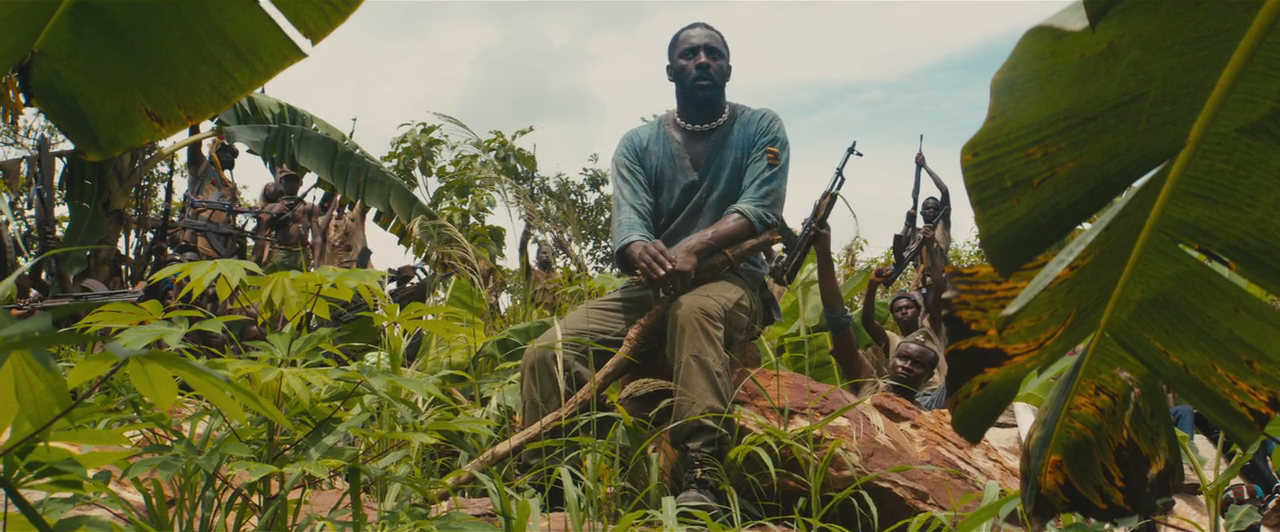
Beasts location in Africa is kept completely anonymous and despite criticism for it painting Africa with a violent generalization, artistically it’s a very defendable move. The anonymity helps immerse us in Agu’s innocent perspective. To a child it matters not what sovereign nation they are in or fighting. They have no choice or say in the matter and are more or less blind to politics. What matters to them is simply surviving, family, and happiness. Even the grass and fauna is well above Agu’s head, it makes sense that his perspective of the war would not be greater. The lack of context for the atrocities creates a vacuum of nihilism for there is no purpose, only victims.
Continue reading What Does Beasts Of No Nation Mean?

Everest, The Martian, and When Films About Risk Play It Safe

Visual spectacle can’t overcome lack of substance in Hollywood’s last gasp of summer

Recently I spent a better part of September meandering about France with my girlfriend (humble-brag or just normal brag?). Pristine Alps, ancient ruins, feats of architecture – you name it, it was beheld. However, I’ve never been a big ‘sights’ guy. This is because, as someone who lives within an average work commute to one of the Seven Natural Wonders of the World, I believe you can and will become numb to any ‘sight’s’ beauty if exposed long enough. I know, cynical right? But just ask the people of Agra what they think of the Taj Mahal, or Chicagoans about the Cloud Gate (the bean thing). But what’s not cynical is the belief that absorption into a person, an idea, or a culture, is endless and endlessly more stimulating. Something, director Baltasar Kormákur would appear not to believe while making Everest.

Everest is a film about a mountain, but the story is about people – a lot of people. Based on Jon Krakauer’s best-selling account of the 1996 Mount Everest Disaster, Into Thin Air, Everest stars, well, a lot of stars. Jason Clarke appears to be the lead as he plays the New Zealand-bred Rob Hall, leader of Adventure Consultants, one of the groups tasked with escorting their climbing clients up to the top of the world. Josh Brolin, John Hawkes, and Michael Kelly – as journalist Krakauer – among others, take up roles as Adventure Consultant’s clients. Opposite Clarke is Jake Gyllenhaal as the resident shirtless and super-chilled-out-brah ski-bum, but also Scott Fischer, leader of the Mountain Madness adventure travel service. Emily Watson and Sam Worthington reside back at one of the many base camps relaying messages for a better part of the film, while Keira Knightley and Robin Wright play worried wife half-a-world-away for Clarke and Brolin respectively.

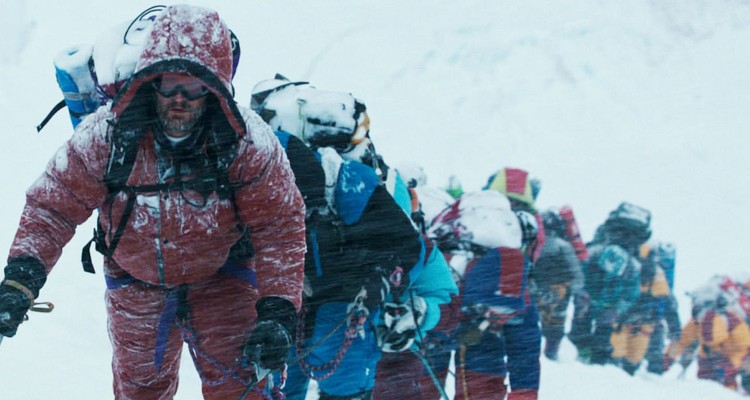
Grand Himalayan eye-candy is strewn about Everest, intercutting each new dramatization and pandering to 3D technology. It’s gorgeous and daunting, and helps to put in perspective the scale of such a venture. As our teams make their way from base camp to base camp acclimating to the altitude, we learn bits about where they’re from and why they’re here. What we don’t learn however is who they are. Characters are sketched haphazardly, defining them by their periphery relationships instead of delving into their psyche through dialogue and actions. Instead of zeroing in on a select few characters, the film casts a wide net, trying to give everyone their moments and their stories. As we ascend up the mountain, through the haze of snow blindness, goggles, and full-body snowsuits, keeping up with the large ensemble becomes confusing. The film’s flurrying attempt to include everyone casts a disorienting vibe over the second half of the film. This results in a lack of genuine emotional investment and participation from the audience. It’s also told from no particular perspective. Not using author and journalist Jon Krakauer’s point of view more, played by the instantly likable and relatable Michael Kelly, feels like a missed opportunity. The film slowly begins to feel like a mic’d up nature doc. everest-movie-review-1-750x400

Continue reading Everest, The Martian, and When Films About Risk Play It Safe

The Colbert Report 2.0

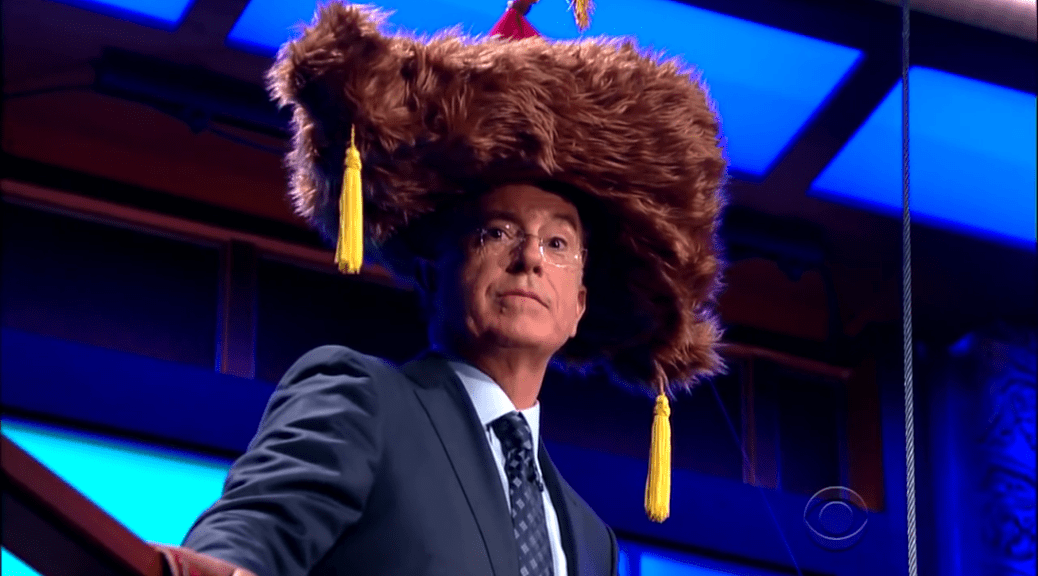
This is late night check-in, a feature where I watch a full week of one talk show and discuss how it was. Last week I watched “The Late Show with Stephen Colbert”, from 9/8 to 9/11.

On Thursday night, during an interview with Joe Biden, approximately four minutes and thirty-five seconds went by without the sound of laughter.

Colbert allows this silence to happen. He doesn’t try to force banter that would stifle the conversation. Instead, he listens, as do we. The Vice President talks about his son, Beau Biden, who has recently passed away from brain cancer. Biden mourns his son with a kind of honesty and vulnerability you might expect to hear if you were eavesdropping on a private conversation. It was incredibly difficult to watch, fraught with emotion from a wound that’s barely healed. It was one of the boldest things I’ve ever seen on a late night television program. Despite its brevity (some of it was cut for broadcast, although you can watch the full interview online), it packed an emotional punch and left an impression about what it means to keep moving forward in the face of incredible loss. I can’t recall the last time a talk show allowed this much room for not only a guest to be so candid about their state of mind, but for the viewer to reflect on something so heartbreaking.

The aforementioned was the clear highlight in a week full of them during the premiere week of “The Late Show with Stephen Colbert” and a terrific sign of things to come. In a packed late night world, Colbert has already started to carve out his own territory, as evidenced by the groundbreaking Biden interview. Before its premiere, the expectations for “The Late Show” have been absurdly high, with all the popular questions rattling throughout the blogosphere – what will the “real” Stephen Colbert do? Will the format be different? Without his blowhard persona to grasp onto, will Colbert sink or swim?

Turns out we all had nothing to fear. Colbert is sticking to the long time late-night formula that has worked since Johnny Carson dominated the universe – monologue, desk piece, interview one, interview two, musical guest/comedian. And while that might seem disappointing to those who were hoping Colbert would completely re-invent the wheel, it begs the question of how in God’s name you could possibly pull that off?

What keeps this old format from seeming ancient is the way Colbert twists each segment to match his style. Yes, there was a monologue, but it was brief and devoid of topical jokes (“Did you see this? Did you hear this?”) that every other late night show includes. Instead, each night featured a few light jokes, quick anecdotes, some banter. No scripted bits, save for one night that featured a parade of famous NFL players making cameos as “new employees” of the show. It was the closest the show came to being flashy for the sake of being flashy. Colbert throws to the band, they perform the theme song, announce the guests, and Colbert sits behind his coveted desk.

Continue reading The Colbert Report 2.0

What’s Wrong with Season Two of True Detective?

Season Two of Nic Pizzolatto’s anthology crime drama is experiencing a sophomore slump, but did it ever have a chance?

Rarely does a show experience such groaning disappointment and fervent ‘trending’ anticipation all at once. This combo has crowned into a hysterical mob of cultural sadism, like a car crash, or say, an overwrought mass shootout you can’t turn away from. Critics reveling from their mezzanines, throwing tomatoes with one hand and tossing popcorn into their cackling mouths with the other. Social media has been a schoolyard beat down of jokes poking at everything from the confusing plot to the faux mysteriousness of its characters.

There was nowhere to go but down, and in retrospect, we should all be kicking ourselves for being so optimistically hyped about the succeeding season of Nic Pizzolatto’s True Detective. What did we really think was gonna happen after Fukunaga departed. Rustin Cohle would be laughing at our blind hopefulness. image

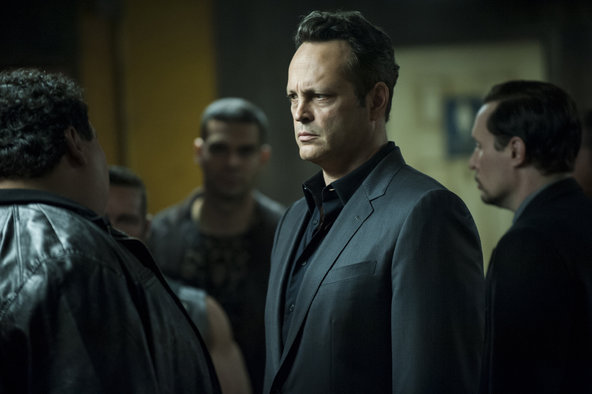
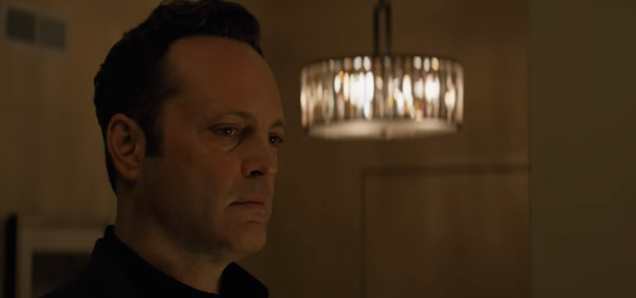
This is the part of the article where one gives a quick run-through of the shows premise. Easier said than done. Ok so, um, well you have Ray Velcoro (Colin Farrell), an alcoholic detective in Vinci, an industrial municipality run by corporations. He’s going through some child custody drama but more importantly is bent to the whim of Frank Semyon (Vince Vaughn), dirty mob entrepreneur trying to go clean, due to a past favor. Ani Bezzeredes (Rachel McAdams) is rough-around-the-edges cop possibly dealing with some repressed sexual issues due to having been raised on some sort of spiritual commune. And then there’s Paul Woodrugh (Taylor Kitsch) former seen-some-things armed forces motorcycle cop who’s struggling to stay in the closet.

These characters are brought together by the brutal murder of Ben Caspere, city manager and business partner of Semyon. Semyon entrusted Caspere with $5 million for a legitimizing high speed rail project, which he finds out Caspere embezzled before his death, causing Frank to lose most his fortune and faith of potential investors and developers. Velcoro is sent by Semyon to investigate, while simulataneously put on the case by the Vinci PD along with Bezzerides and Woodrugh. As a result, feathers are ruffled, alliances are tested. 
td-tmagArticle Continue reading What’s Wrong with Season Two of True Detective?

President Barack Obama Opens Up

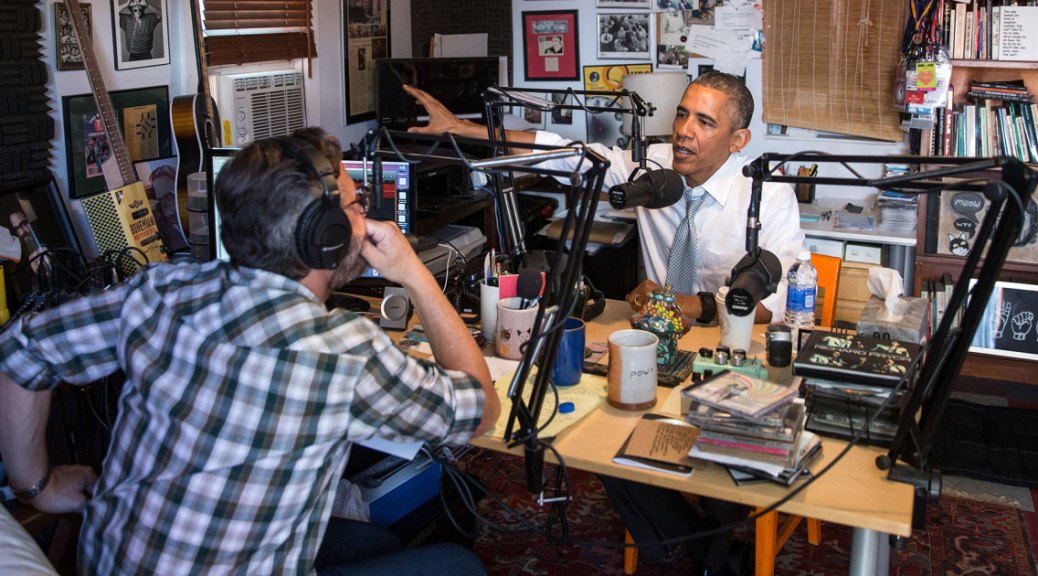
Two of my worlds collide, smashing President Barack Obama out of his egg, which detached him from the mystic narratives built in many American’s minds – “He’s a level-headed academic”. President Barack Obama sat down with legendary stand-up comic Marc Maron, who also happens to be one of the greatest interviewers of all-time, and gave incredibly honest and thoughtful answers.

President Barack Obama and Marc Maron could not be any different in temperament. President Obama comes off as somewhat emotionally disengaged and optimistic, whereas Marc is an anxious narcissist with anger issues. Barack Obama has a wife and two daughters, Marc has never completely settled down and is a proud owner of too many cats. The interview takes place in Marc Maron’s garage, which just so happens to be down the street where President Obama inhabited during his early adulthood.

The interview takes off immediately which highlights Marc Marons uncanny ability to put a guest at ease despite his hyperactive demeanor. They dive deep into macro political issues like healthcare, terrorism, and racism. The interview takes place shortly after the horrific massacre in Charleston, South Carolina. This adds extraordinary context to the interview. The Charleston shooting is the most significant hate crime in the last 50 years. President Obama doesn’t draw the race-card, he doesn’t say that America is broken. He believes that the issue boils down to insecurity and lack of identity rather than an inherent bad nature of human beings. You can really tell he takes a Lockean view of human nature rather than a Hobbesian view of human nature (even though he doesn’t go as far as a lot of Americans; as in he doesn’t fully buy Locke’s theory of property, which in the Earth was put here for humans to use to any benefit).  The President actually repeatedly says that race relations are much better than they were 50 years ago.

However, President Obama does not hold back on his frustration over the uniqueness of the mass-shooting problem in the United States. He cites Australia was able to act quickly because the public was so outraged over the one and only mass shooting in their country 25 years ago. President Obama explains how the most disturbed he has been was Congress’s inability to act after the Sandy Hook Massacre. While being firm on what he calls “common-sense gun control reforms”, he understands that hunting is a key part of life for many Americans and often symbolizes or evokes feelings of nostalgia and tradition.

Continue reading President Barack Obama Opens Up