Tag Archives: Essay

What Does Beasts Of No Nation Mean?

Netflix’s big splash into original films is a movie about the loss of innocence 

There are a lot of ways this could be answered, particularly because there are a lot of ways it could be asked. What Netflix’s first bonafide Oscar launch attempt means for the future of film distribution, for opportunistic auteurs, or for big studios and multiplexes. A lot of that is boring and almost all of it is speculative. Online streaming sites and apps will only be able to create more and more quality TV and films for the foreseeable future; that much we know. Beasts alternative release plan of simultaneous theatrical and online release was enough of a rebellion from status quo for major U.S. theatre chains such as AMC and Regal to boycott the film. Thus, the $6 million dollar film made less than $60,000 at the box office – but that pain is eased by the reported $12 million Netflix forked over for distribution rights. It’s hard to say how much of, if at all, a thorn in the side of Hollywood this trend could be. Frankly, I don’t actually care. On the other hand, Beasts of No Nation may be the shot that’s ending a cinematic cold war.

Beasts director, writer, co-producer, and cinematographer Cary Fukunaga, who you may remember as the director of that one good season of True Detective (ahh, memories), has a knack for gorgeous images. In fact, most of his resume is work as cinematographer on short films and documentaries. So it comes as no surprise that Beasts of No Nation is a hearty buffet of vividly colored frames. In those frames is, most notably Idris Elba, as the ‘Commandant’ of the rebel militia that captures our young Agu (played by Ghanian actor Abraham Attah) after his father and brother are killed trying to escape the government troops. Elba’s Commandant assumes Agu’s father’s figure as he shapes him into one of the many child-warriors in his battalion. Agu is conditioned with violence and brainwashed with wartime rhetoric. He witnesses unspeakable cruelty and is the victim of heinous acts. Through these ordeals we begin to understand the lust for killing brewing in these children as a natural reaction to trauma. After his Commandant who he had begun to trust and admire, sexually assaults Agu, squeezing a trigger and screaming feels almost therapeutic. This is the films greatest triumph; humanizing the warped mind. Screen Shot 2015-10-20 at 12.11.12 PM
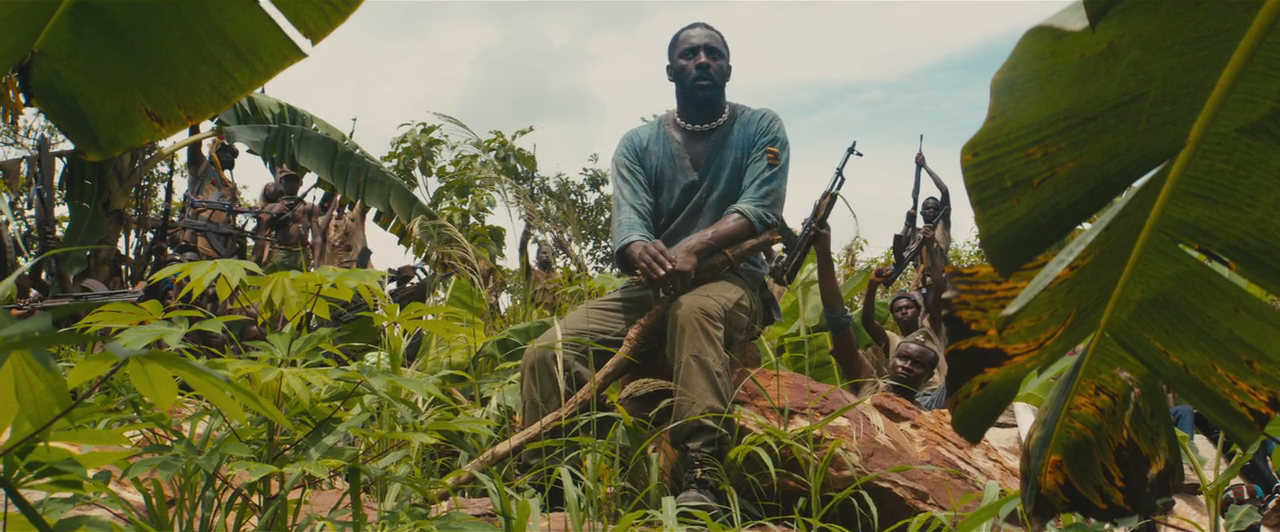
Beasts location in Africa is kept completely anonymous and despite criticism for it painting Africa with a violent generalization, artistically it’s a very defendable move. The anonymity helps immerse us in Agu’s innocent perspective. To a child it matters not what sovereign nation they are in or fighting. They have no choice or say in the matter and are more or less blind to politics. What matters to them is simply surviving, family, and happiness. Even the grass and fauna is well above Agu’s head, it makes sense that his perspective of the war would not be greater. The lack of context for the atrocities creates a vacuum of nihilism for there is no purpose, only victims.

Continue reading What Does Beasts Of No Nation Mean?

Everest, The Martian, and When Films About Risk Play It Safe

Visual spectacle can’t overcome lack of substance in Hollywood’s last gasp of summer

Recently I spent a better part of September meandering about France with my girlfriend (humble-brag or just normal brag?). Pristine Alps, ancient ruins, feats of architecture – you name it, it was beheld. However, I’ve never been a big ‘sights’ guy. This is because, as someone who lives within an average work commute to one of the Seven Natural Wonders of the World, I believe you can and will become numb to any ‘sight’s’ beauty if exposed long enough. I know, cynical right? But just ask the people of Agra what they think of the Taj Mahal, or Chicagoans about the Cloud Gate (the bean thing). But what’s not cynical is the belief that absorption into a person, an idea, or a culture, is endless and endlessly more stimulating. Something, director Baltasar Kormákur would appear not to believe while making Everest.

Everest is a film about a mountain, but the story is about people – a lot of people. Based on Jon Krakauer’s best-selling account of the 1996 Mount Everest Disaster, Into Thin Air, Everest stars, well, a lot of stars. Jason Clarke appears to be the lead as he plays the New Zealand-bred Rob Hall, leader of Adventure Consultants, one of the groups tasked with escorting their climbing clients up to the top of the world. Josh Brolin, John Hawkes, and Michael Kelly – as journalist Krakauer – among others, take up roles as Adventure Consultant’s clients. Opposite Clarke is Jake Gyllenhaal as the resident shirtless and super-chilled-out-brah ski-bum, but also Scott Fischer, leader of the Mountain Madness adventure travel service. Emily Watson and Sam Worthington reside back at one of the many base camps relaying messages for a better part of the film, while Keira Knightley and Robin Wright play worried wife half-a-world-away for Clarke and Brolin respectively.

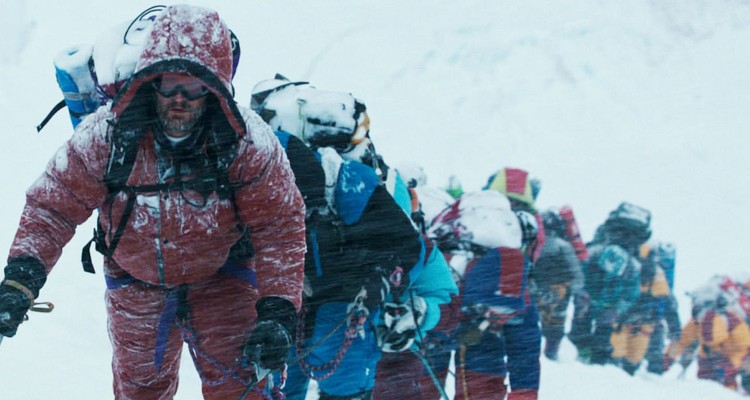
Grand Himalayan eye-candy is strewn about Everest, intercutting each new dramatization and pandering to 3D technology. It’s gorgeous and daunting, and helps to put in perspective the scale of such a venture. As our teams make their way from base camp to base camp acclimating to the altitude, we learn bits about where they’re from and why they’re here. What we don’t learn however is who they are. Characters are sketched haphazardly, defining them by their periphery relationships instead of delving into their psyche through dialogue and actions. Instead of zeroing in on a select few characters, the film casts a wide net, trying to give everyone their moments and their stories. As we ascend up the mountain, through the haze of snow blindness, goggles, and full-body snowsuits, keeping up with the large ensemble becomes confusing. The film’s flurrying attempt to include everyone casts a disorienting vibe over the second half of the film. This results in a lack of genuine emotional investment and participation from the audience. It’s also told from no particular perspective. Not using author and journalist Jon Krakauer’s point of view more, played by the instantly likable and relatable Michael Kelly, feels like a missed opportunity. The film slowly begins to feel like a mic’d up nature doc. everest-movie-review-1-750x400

Continue reading Everest, The Martian, and When Films About Risk Play It Safe

What’s Wrong with Season Two of True Detective?

Season Two of Nic Pizzolatto’s anthology crime drama is experiencing a sophomore slump, but did it ever have a chance?

Rarely does a show experience such groaning disappointment and fervent ‘trending’ anticipation all at once. This combo has crowned into a hysterical mob of cultural sadism, like a car crash, or say, an overwrought mass shootout you can’t turn away from. Critics reveling from their mezzanines, throwing tomatoes with one hand and tossing popcorn into their cackling mouths with the other. Social media has been a schoolyard beat down of jokes poking at everything from the confusing plot to the faux mysteriousness of its characters.

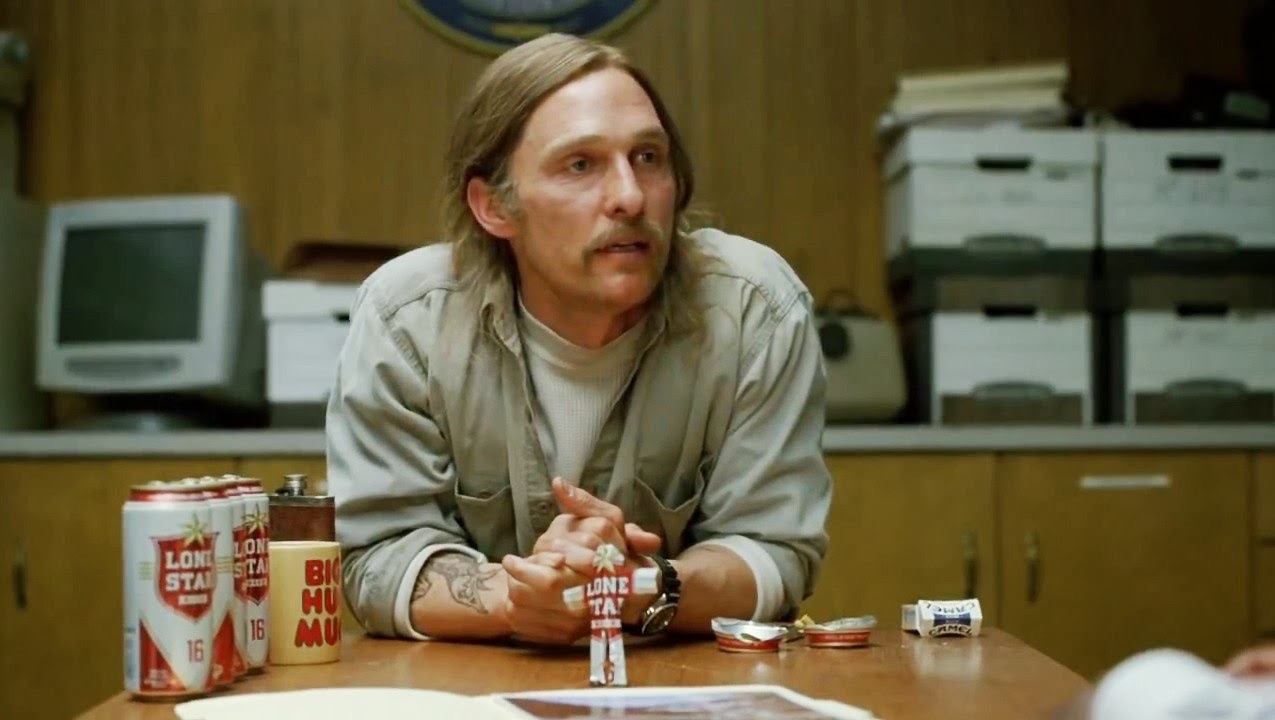
There was nowhere to go but down, and in retrospect, we should all be kicking ourselves for being so optimistically hyped about the succeeding season of Nic Pizzolatto’s True Detective. What did we really think was gonna happen after Fukunaga departed. Rustin Cohle would be laughing at our blind hopefulness. image

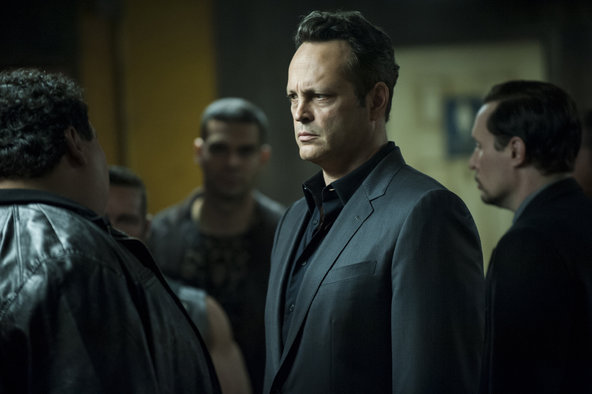
This is the part of the article where one gives a quick run-through of the shows premise. Easier said than done. Ok so, um, well you have Ray Velcoro (Colin Farrell), an alcoholic detective in Vinci, an industrial municipality run by corporations. He’s going through some child custody drama but more importantly is bent to the whim of Frank Semyon (Vince Vaughn), dirty mob entrepreneur trying to go clean, due to a past favor. Ani Bezzeredes (Rachel McAdams) is rough-around-the-edges cop possibly dealing with some repressed sexual issues due to having been raised on some sort of spiritual commune. And then there’s Paul Woodrugh (Taylor Kitsch) former seen-some-things armed forces motorcycle cop who’s struggling to stay in the closet.

These characters are brought together by the brutal murder of Ben Caspere, city manager and business partner of Semyon. Semyon entrusted Caspere with $5 million for a legitimizing high speed rail project, which he finds out Caspere embezzled before his death, causing Frank to lose most his fortune and faith of potential investors and developers. Velcoro is sent by Semyon to investigate, while simulataneously put on the case by the Vinci PD along with Bezzerides and Woodrugh. As a result, feathers are ruffled, alliances are tested. 
td-tmagArticle Continue reading What’s Wrong with Season Two of True Detective?

Is The Tonight Show Really That Bad?

This is late night check-in, a feature where I watch a full week of one talk show and discuss how it was. Last week I watched “The Tonight Show Starring Jimmy Fallon”, from 4/27 to 5/1.

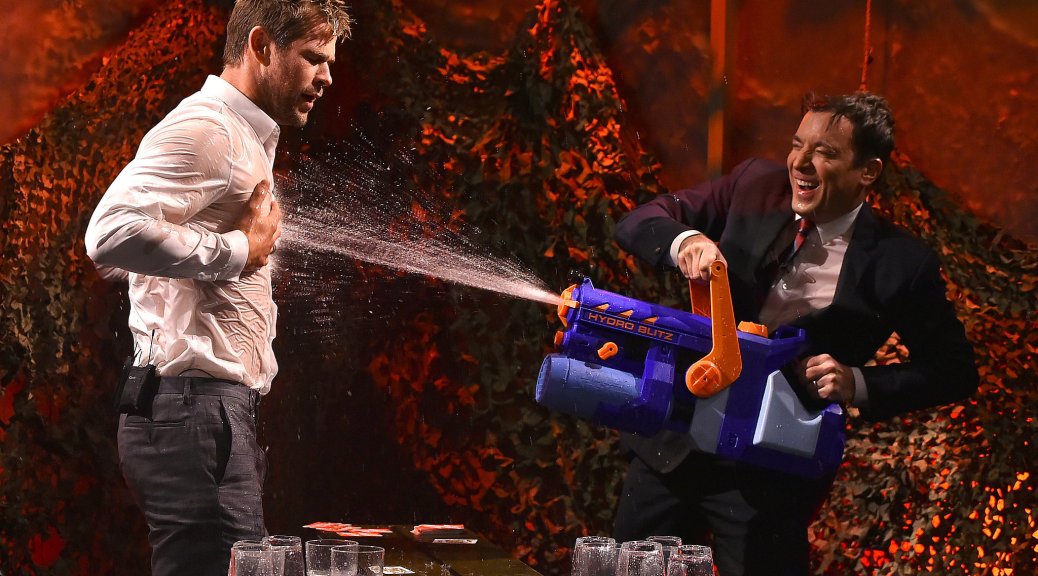
The Tonight Show has taken a lot of flack over the past few years. Since the Conan-Leno debacle and the backlash against the latter, The Tonight Show is no longer the cultural touchstone it once was (when every conceivable adult in America gathered around a television to watch Johnny Carson.) Today, there are plenty of late night options to choose from with no real king – though it’s easy to argue that Jimmy Fallon could claim such a title. His incarnation of the show is currently the highest rated late night talk show. His YouTube channel has 7 million subscribers with nearly 3 billion total views and produces at least one viral video per week.

A lot of comedy nerds will tell you The Tonight Show is crap. There’s no comedy, it’s just a bunch of meandering games, etc. Andrés du Bouchet, a long-time writer for Conan, recently caught some heat for tweeting about his dissatisfaction regarding the aforementioned. “Comedy in 2015 needs a severe motherfucking shakeup,” he said in a now deleted tweet. “No celebrities, no parodies, no pranks, no mash-ups or hashtag wars. I’m fat.”

So how much of that is accurate? The current incarnation of The Tonight Show features a regular dose of celebrity-based comedy, parodies and mash-ups. There’s few pranks and certainly no hashtag wars but the show does feature Tonight Show Hashtags (we’ll get to that later.) How much of this is pandering to the audience and how much is actual comedy? What’s to be expected when you watch a full week of The TonightShow?

First things first. Jimmy Fallon has come a long way since his nervous, jittery Late Night debut six years ago. He’s now a seasoned performer with all the chops necessary for being a talk show host. Like all good talk show hosts, he’s crafted a niche for himself. Fallon is an entertainer, ideally one for the whole family. He’s immensely positive and likable. It’s hard to hate a guy who wants the audience both at home and in studio to have fun. Both the show and its host are completely devoid of cynicism.

His monologue at the top of the show is quick, efficient and confident. Like Conan, Fallon tends to act out things at the end of jokes. His chameleon-like impressions can elevate a joke further or even save a particularly bad one. He’ll riff and improvise with his sidekick, Steve Higgins, and it’s usually pretty good. And anytime The Roots chime in, it’s just icing on the cake.

Continue reading Is The Tonight Show Really That Bad?

A Month After Its Release, We Grapple with TPAB’s Place

Illmatic or It Was Written? Ready to Die or Life After Death? Slim Shady LP or Marshall Mathers LP? Food & Liquor or The Cool? good kid, m.A.A.d city or To Pimp a Butterfly?

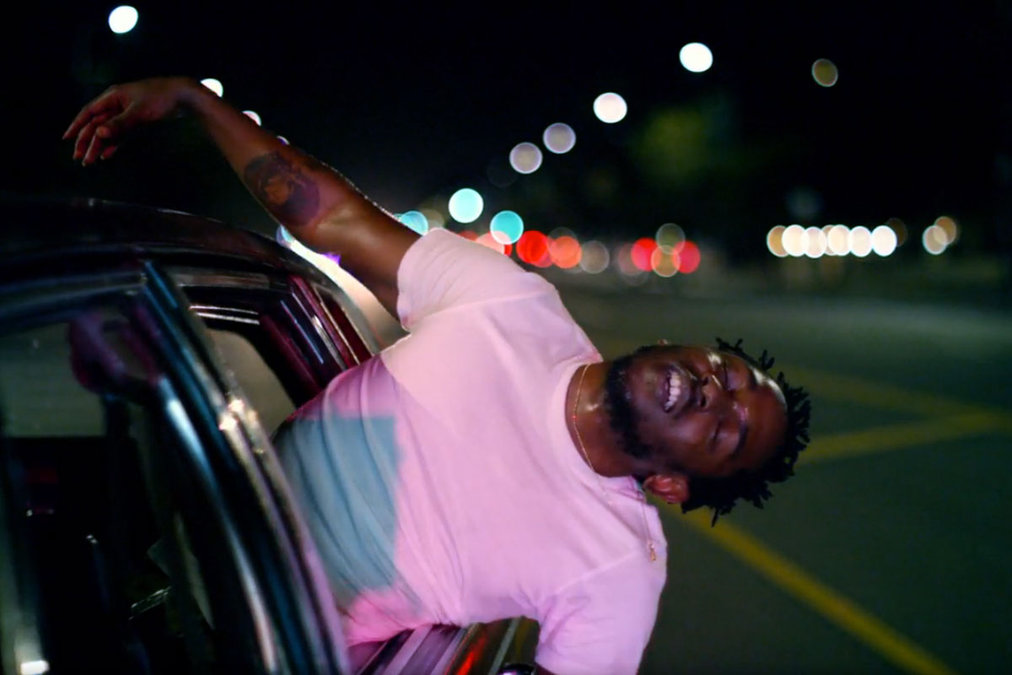
The prophecy has been foretold, and foretold, and foretold. The savior, who drops two classics, then disappoints us, and if he’s truly the savior, makes up for it in the long run (see: Nas). But I’m not going to postulate about the future for Kendrick, instead lets appreciate what this particular prodigy has done. When I first heard To Pimp a Butterfly I was positive it was better than GKMC. This was what I had been waiting for, where parts of GKMC left me yearning for just a little more, I now felt satisfied.

TPAB is not an album you can taste in one sip, or even one glass. It requires intensive, diligent and repeated consumption. You will change your mind again, and again, and again, about elements of it. Second albums by the prodigious rap star are always sprawling attempts to recapture the spirit of the first, while proving that they can do even better. They usually lash out at a force bigger than themselves and puff out their chest at anyone trying to tell them anything. This is where Kendrick separates himself. Where most have taken this moment to give the world an angst-y middle finger and stomp up their gorgeous marble spiral staircase and slam their heavy double doors, Kendrick only blames himself. With armor-piercing self-awareness, he blames himself for even the possibility that fame and wealth has changed him, for even the potential for him to be corrupted. It’s a bleak but cautionary parable from a future self, sent to forewarn of the self-loathing guilt that will await him should he betray Compton. Don’t play the victim, be responsible for “U” he infers; this is a common theme throughout.

After a year full of #BlackLivesMatter and #ICantBreath you’d think Kendrick would aim some, if not most, of his fire-breathing passion at institutional racism on his 16 track, hour-plus slam poetry funk record. But somehow he didn’t. It’s perplexing at best, and irresponsible at worst. Okay, to be fair there is “The Blacker the Berry”. But it’s hard to tell how much of that anger is aimed at himself, and how much is at the system that “hates him” when he begins and ends the song with calling himself a hypocrite. His stream-of-consciousness flow wrestles with issues of black self-love and hypocrisy throughout the album. Symbolically, on “i” he addresses the importance self-esteem, and then when the dramatized live crowd causes a ruckus he lectures them about the word “nigga”. It’s clumsy, but it’s also about perspective. About when you’re in the heat of the moment, step back and see the bigger picture. Where GKMC weaved its way through the nooks and crannies of the city, TPAB weaves through the psyche of young Kendrick like a parasitic epiphany; an epiphany that is heavily centered on Black unity and cultural appreciation.

kendrick-lamar-i-music-video_article_story_large Continue reading A Month After Its Release, We Grapple with TPAB’s Place

Too York?

Why the Southern Tier of New York wants to secede Pennsylvania

Wow, this part of New York looks like Pennsylvania. Wow, this part of New York may become Pennsylvania. Not really. But, the idea is out there. Fifteen towns in the Southern tier of New York announced that they would consider seceding from the Empire State to join their more conservative and depressed citizens of Pennsylvania. I am from Upstate New York and yes, I am sick of meeting people from other states and being asked “how many other families lived in my apartment growing up” or “how many times I have been mugged” but secession would be very foolish for these communities.

There is no question about it Upstate New Yorkers and Downstate New Yorkers are different. They are different culturally, ideologically, and financially. Upstate still holds onto late 19th century neo-liberal ideology of private institutions such as the family, and church to govern and administer community issues. Downstate takes a more modern utilitarian systems approach to solving problems. The city has made a huge comeback since the 1970’s. Upstate continues to struggle, even though Buffalo is on a serious rebound. There is also a representative issue. Most NYS legislators are from Downstate districts.

ARC-Map-

Upstate feels ripped off. First the city uses us for the Erie Canal then hangs us out to dry. Now they won’t let us poison our water with hydro-fracking OR poison our communities with casinos. On top of all that I have to pay ridiculously high taxes that are probably going to welfare recipients Downstate who are too lazy to work and are just cheating the system. Right.

Continue reading Too York?

A Music and Text Analysis of Franz Schubert’s Winterreise

Franz Schubert’s vocal cycle Winterreise, tells the story of a man who has embarked on a long winters journey. All twenty-four pieces in the song cycle share similar themes, metaphors, and central conflicts. Two pieces in particular are Rast (Rest) and Einsamkeit (Solitude). The narrator is weak, torn, and mentally unstable for his travels. He longs for true love, but winter’s sorrow has taken its toll. Therefore, these two works are related to one another through the analysis of text, key signature, and central metaphor.

Rast is the tenth song in Winterreise and is in strophic form. The piece is set in the key of D minor and the A section consists of two similar phrases. The a phrase concludes with a perfect authentic cadence (m.10) and is followed by the a which changes tonality with a perfect authentic cadence in the key of F major (m.15). These two phrases share a special relationship with the text. The cadence that occurs in both of these phrases occurs on a word that depicts struggle and travel. The a phrase ends on “Da ich zur Ruh mich lege” (as I to the sleep myself lie down) and the a phase ends on “Auf unwirtbarem Wege” (on inhospitable paths). The a phrase cadence depicts how slowed down, worn out, and frazzled the narrator is from his travel. A’ talks of how his travels prevent him from sleeping. His thoughts of longing for true love keep him unsettled during his time of rest. The use of F major puts much weight on his feelings of sorrow and loneliness. The B section consists of six small phrases. The a phrase ends with a perfect authentic cadence in G major (m.18), the b phrase ends with a perfect authentic cadence in F major (m.20), the c phrase ends on a half cadence in the tonic key of D minor (m.22), the d phrase has a perfect authentic cadence (m.25), the cphrase has a half cadence (m.28), and the dphrase concludes with a perfect authentic cadence (m.31). The A and B section return and follow the same phrase structure.

Shubert uses an example of an unsung voice in the phrase “doch meine Glieder ruhn nicht aus, So brennen ihre Wunden” (yet my limbs rest not so burn their bruises) (m.42-45). The vocal melody and the piano are playing a very calm and melodic passage. The text gives off the impression that the narrator is not content with his aching body, ultimately giving into his sorrow. The narrator lacks motivation to go on and has given up. Schubert also uses an example of word painting by using contrasting phrases and dynamics. The phrase “Fühlst in der Still’ erst deunen Wurm/Mit heissen Stich sich regent” (feel in its stillness the serpent stir with its hot sting!) demonstrates this. The first half of the phrase (m.57-58) talks of how the narrator is able to feel a serpent on his body. The music during this is calm and peaceful. When the narrator feels the hot sting of the serpent, the music becomes more intense. This dramatic effect puts an emphasis on the narrators overall emotional well being. The narrator seems to have a lot doubt surrounding his own strength. He does not put up a very strong fight to change his situation, rather just accepts his loneliness and despair.  Continue reading A Music and Text Analysis of Franz Schubert’s Winterreise

Do You Even Act Rationally Bro?

Do You Even Act Rationally Bro?

If you have taken an introductory economics class, you learn that the world is made up of rational human beings trying to allocate scarce resources. In essence, people demand goods that have a limited supply. Where demand meets price is where we get the equilibrium quantity and price. What this classic model fails to notice is that people are fucked. It also fails to recognize that people are sometimes irrationally good. In the three sections of this article, I will discuss the areas where the classic view of economics is not sufficient. In essence, this article is a quick overview of some basic concepts in behavioral economics.

Thats Not Ethical, Man

If you solely accept the simple principle of supply and demand as your over-arching market compass, you may be a giant dick. Under this view, you would be okay with a hardware store increasing the price of snow shovels the morning after a large snowstorm. In that, the snowstorm increased demand and due to that increase, price should shift upward. Behavioral economists Daniel Kahneman, Jack Knetch, and Richard Thaler proposed this scenario in a survey to individuals asking if it was fair. 82% of respondents answered that the price hike was unfair. So although theoretically the storm increased demand for snow it did not increase peoples willingness to pay because they see the price increase as unjustified and therefore unfair.

So, if it isn’t just simple supply and demand that dictates price and profit, then what does? The answer involves a little sociology my friends, in that social norms dictate community standards of fairness. Ernst Fehr believes a social norm has three parts:

  • It is a behavioral regularity; that is
  • Based on a socially shared belief of how one ought to behave; which triggers
  • The enforcement of the prescribed behavior by informal social sanctions.

So what have us wealth thirsty capitalists defined as fairness in the application to price, rent and wage setting? “A relevant precedent that is characterized by reference price or wage.” Da Fuq?!?!? No, it really is quite simple and is known as the principle of dual entitlement. The basic idea is that, transactors have an entitlement to the terms of the reference transaction and firms are entitled to their reference profit. This means a firm is not allowed to increase its profits by arbitrarily violating the entitlement of its transactors to the reference price, rent, or wage. So raising the price of snow shovels after a storm is arbitrary, but raising the price of snow shovels because of an increase in cost for the firm would be fair. What are the possible sources of reference transactions? Price, posted price, and previous transactions between a firm and a transactor.

Continue reading Do You Even Act Rationally Bro?

With The Dust Settled, American Sniper Finds Itself In No Man’s Land

Sniper leaves a parable of reactionism in its wake

For the past few weeks, no matter what part of the country you’re from, America has been under attack. We’ve endured a blitzkrieg of mortar-launched articles, think-pieces, tweets, op-eds, Facebook posts, TV rants, reactions, and even challenges, leaving a hazy fog of opinions to settle on the nation. On one side we have the ever-present “war is some badass shit” party. Opposite them resides the up-and-coming “war is like, not chill” party. For every bold countryman who took a shot at American Sniper and its drawling hero, an equally courageous samaritan recoiled and fired back in the reactionary way that one does when a stranger says something about your mother. It was clear there was no common ground to be seen, well, except for the film itself. Have you guys seen the film?

[Gasping for air as I snap out of pun-induced blackout] Ok. Give Clint Eastwood credit for creating a patriotic Iraq War movie that isn’t necessarily pro-war, but not too much credit. Eastwood shies away from making it a wholly anti-war film, and what could have been a damning portrayal of post-9/11 American foreign policy. Instead he articulates Chris Kyle’s red, white, and blue ‘true’ story in shades of grey.

First of all, taking political statements from troops should never be your first choice. I understand there’s a utility to having a first-hand account, but their heads are largely slathered with propaganda. They also are taught a strict adherence to whatever an unseen disciplinary chain of command tells them. These men are not geopolitical analysts; they are soldiers. But that’s neither here nor there; because forming political opinions based on this film is very odd anyway considering it seems deliberately apolitical. There isn’t one mention of the phrase ‘Iraq war’, ‘weapons of mass destruction’, or ‘Saddam Hussein’ and I believe I only heard ‘terrorist’ once. There isn’t a shot of a TV with pundits debating the legitimacy of said war either. Yet, we do see Kyle watching the news as it reports of the 1998 U.S. Embassy bombings in eastern Africa. After seeing this, Kyle enlists in the U.S. Navy looking to “be of service.” The next time we see a TV it’s September 11th, and Kyle and his newly married wife are visibly distraught. Kyle is sent to Iraq immediately after. That’s where it gets tricky.

It’s easy to say that Eastwood is being irresponsible by implying that the invasion of Iraq had anything to do with 9/11. But the truth of the matter is that, for better or worse, this tale is 100% from Chris Kyle’s perspective. Kyle enlisted without an attack on American soil even occurring, so it’s easy to assume he couldn’t have cared less if Saddam Hussein was hiding WMD’s under his totalitarian ‘stache. It was America time. War o’clock. Gun hour? Whatever. It’s a film adaptation of an autobiography, and Eastwood takes that very literally. ‘Don’t shoot the messenger’, Clint says (for the first time in his life). All complaints regarding humanitarian faux pas are to be forwarded to the residence of Mr. Christopher Kyle, punk.

Continue reading With The Dust Settled, American Sniper Finds Itself In No Man’s Land

In Defense of Billy Eichner

I had a conversation with a friend of a friend recently who was not from around here. That is to say, she wasn’t from America at all. She grew up in South England and this was her first trip to New York. She informed that while she grew up on a steady diet of American pop culture, she was no expert on the subject and felt very lost in New York City (“It’s nothing like Sex in the City,” she informed me.) She was telling me about how she couldn’t quite describe Manhattan in relation to other cities she had visited, how Manhattan felt like so many places at once, a complicated puzzle nobody could solve, and I informed her that trying to summarize New York City is a fool’s errand. She then asked me what movies or TV shows felt best captured the essence of New York City, and it sent my brain into a tailspin. A lot of things popped up at once. Some were obvious answers. Most Woody Allen films, for starters. Taxi Driver, Dog Day Afternoon, The French Connection. Then you got your TV shows, all of whom do the city justice. Seinfeld, of course. 30 Rock is a staple. Broad City is brilliant and captures the essence of being young, lost and stoned in New York City (unlike it’s melodramatic cousin Girls.) It seemed like a great recommendation, until I remembered Billy on the Street. At first, it seemed like a game show with such games as “Rapper or Nic Cage character?” doesn’t quite fit the profile, but Billy Eichner sure as hell does.

Billy Eichner yells. He yells a lot. It’s his thing. His shtick, as far as most people are concerned (“The best part of that is when you scream at me,” declared David Letterman with zero irony after playing a game with him entitled “Celebrity Child or Kentucky Derby Winner.”) In his game show and most of his media appearances, he asks trivia questions related to pop culture. Though it starts with a calm explanation, it frequently escalates into comedic explosion as Billy grows frustrated with the participants lack of knowledge. He has other moves in his comedy toolkit yet people seem to focus only on the fact that, yes, Billy Eichner yells a lot, and your amusement of this may vary.

His profile has increased dramatically in the past year. The third season of Billy on the Street aired and featured a murderer’s row of special guests (Olivia Wilde, Neil Patrick Harris, Paul Rudd, to name a few.) He’s done rounds on pretty much every major talk show in America. He has a recurring role on Parks and Recreation. His new show, Difficult People, an Amy Poehler-produced comedy starring him and Julie Klausner, was picked up for a full season on Hulu and will debut next year. He had a featured bit at the Emmys that killed and was perhaps the only saving grace in an otherwise bland evening of typical award show charades.

Despite this, Billy has caught a lot of unnecessary flack. There are people who call out his shtick, persona, whatever you want to call it. It’s grating. It’s annoying. It gets old fast. Not that we should ever live our lives by YouTube comments (or even look at them to begin with), but for every ten comments that are positive, there’s at least one negative person typing “this faggot isn’t funny.” I really don’t think Billy Eichner is disliked because he’s gay, though there are certainly some homophobic ass holes out there who beg to differ. I don’t see straight people, specifically males, watching Billy Eichner and thinking “Well, he’s gay, and I’m straight, so I can’t actively watch this guy.” I’m pretty sure we’re getting better on that front. Most Americans aren’t looking at it through that viewpoint.

Continue reading In Defense of Billy Eichner