Category Archives: Writing

Bored with usual spring break destinations, 8 trust fund kids are going to the moon this break

“Yeah, once you go to Turk and Caicos for the fifth time it kind of loses its luster you know? So this year we decided to switch it up and go to the moon” Says Tyler Chadberg of Merrick, New York.

Tyler and seven of his closest bros have rented a space shuttle to go to the moon. The group of American Flag tank top, and pastel short wearing trustifarians left early last Saturday for their trip. “It’s kind of dark out here but the zero gravity is a better floaty feeling than the molly we scored last Spring Break so we are pumped about that” said Kyle Witherton late Tuesday evening.

The shuttle which has been deemed “The Space Boner” by the squad will land on the moon later tonight. The shuttle is also equipt with a selfie stick to get the maximum amount of shots of the squad doing Coors Light keg stands. It isn’t all flat brims and rainbows though. “Shawn forgot to bring his foam machine AND backup batteries for the ihome, we are tough, we will find a way to make it through” said Tyler.

The Space Boner is due back to Earth Sunday evening so they can all be back for class on Monday.

Is Chattanooga The South’s Silicon Valley?

As I sit inside a café built into a once abandoned warehouse perusing a craft beer menu, I have to remind myself that I’m south of the Mason-Dixon. The warehouse district in Chattanooga, Tennessee, known as Warehouse Row, is filled with modern cafés, Pilates and yoga studios, and artisanal boutiques. It’s something you might not expect to come from a small city bordering deep red states Alabama and Georgia.

The bartender sets my draft on a refrigerated strip of bar top, a neat little innovation. The menu is full of southern comfort food, biscuits, mac ‘n’ cheese, and fried chicken; but it’s the ‘goat cheese’ grits that have caught my attention. Long story short, delicious; and it all adds up to this curious juxtaposition of slightly snobby southern comfort.

That weekend I spent in Chattanooga a comic-con, known as Chatta-con was being held in the convention center downtown. After indulging in some people-watching in the lobby of my hotel, I met a photographer who told me the best way to get around downtown is the “free electric shuttle system.” What is this the Google campus? The shuttles, which look just like your everyday city bus, run on electricity and use easy-to-replace battery packs. In addition, some “smart buses” offer free wifi. Oh, and it’s FREE to ride.

Now, I’m just a good ole northern boy and this kind of techno-stuff can leave me a tad befuddled. So when the FCC passed its net neutrality bill last week, we decided to take a closer look.

Chattanooga, Tennessee is faster than you. For less than $70 a month, consumers enjoy an ultrahigh-speed fiber-optic connection that transfers data as instant pulses of light rather than signals over a metal cable. These fiber-optic cables send data at one gigabit per second. That is 50 times the average speed for homes in the rest of the country.

Wow this is great, which private corporation made this possible? Don’t tell me, don’t tell me…..Enron is making a comeback?! No, actually it’s Chattanooga itself. The City of Chattanooga owns a public utility company, Electric Power Board (EPB). Only about 2,000 cities in the U.S. have community owned electric utilities, and only a handful of those include public internet as a utility. Chattanooga is the first to install a fiber-optic network for its public internet services. This began when they received an $111 million federal stimulus grant, which gave them the ability to expedite construction of a fiber-optic network.

YOU MEAN OBAMA HAS MADE MY BELOVED TENNESSEE SOCIALIST???

Continue reading Is Chattanooga The South’s Silicon Valley?

Ships in the Night

Hibachi

The number of people on earth greatly out number the places to visit. It is not strange to think that we have been in multiple places with the same people and not recognize them.

The tour group of prospective students proceeded along the University’s side walk.

“This building on our left is Clet Hall.” The junior tour guide announced. “This is where all of the chemistry majors play scientist.”

In the middle of the group was Derek. Next to Derek was his mother who’s nose was buried in a catalog for the college.

“It’s nice to walk around in a t-shirt in October. The tree’s are so beautiful up here.” Derek said to his mother.

“Did you see this Derek? They have a hibachi grill down in the cafeteria. You love Chinese food.”

“Are you serious?”

In the front of the group were Maggie and her mother. Maggie’s mother could stop asking pertinent questions to the tour guide, such as the library hours, campus police routes, and healthiest snack machines on campus. The tour guide stared slack jawed and continued on with the tour.

“Get familiar with Clet Hall honey. Your Nobel Prize research will be conducted there.”

“Mother, please.” Maggie could feel the other parent’s cold stare. Her mothers goading about her always made Maggie feel uncomfortable. “All I can do is my best, mother.”

“…And your best will no doubt lead to a Nobel Prize. Right? Right?”

“Yes, mother.” Maggie sighed.

“Excuse me,” A mother of another tour guide child tapped Maggie’s mother on the shoulder, “Maybe you should get through the tour before you write her Nobel Prize acceptance speech. We are trying to listen to Theodore.”

Maggie’s mother slowly turned around. She examined the bold mother and her son.

“Physical Education Major? The Community College is across town.” The other mother gasped and Maggie’s mother enjoyed her victory.

“Who is Theodore?” She asked Maggie, who pointed up to the tour guide.

“Does anybody have any other questions?” Theodore asked, refusing to make eye contact with Maggie’s mother. “Yes, boy in the blue stripped shirt.”

“Yes, the catalog mentions that there is a hibachi grill on campus. What days are it open?” Derek asked.

“Unfortunately, due to a fire hazard from last semester and the deportation of Chef Ne Foo, the hibachi grill will be closed until the spring semester. Alright, let’s check out the boys and girls dorms, which are not co-ed.”

Continue reading Ships in the Night

Too York?

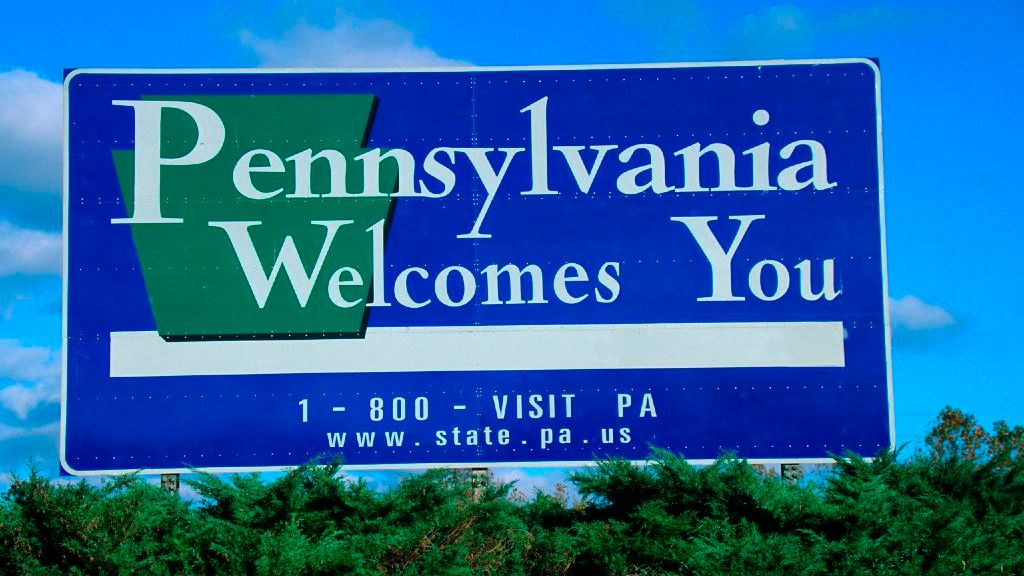
Why the Southern Tier of New York wants to secede Pennsylvania

Wow, this part of New York looks like Pennsylvania. Wow, this part of New York may become Pennsylvania. Not really. But, the idea is out there. Fifteen towns in the Southern tier of New York announced that they would consider seceding from the Empire State to join their more conservative and depressed citizens of Pennsylvania. I am from Upstate New York and yes, I am sick of meeting people from other states and being asked “how many other families lived in my apartment growing up” or “how many times I have been mugged” but secession would be very foolish for these communities.

There is no question about it Upstate New Yorkers and Downstate New Yorkers are different. They are different culturally, ideologically, and financially. Upstate still holds onto late 19th century neo-liberal ideology of private institutions such as the family, and church to govern and administer community issues. Downstate takes a more modern utilitarian systems approach to solving problems. The city has made a huge comeback since the 1970’s. Upstate continues to struggle, even though Buffalo is on a serious rebound. There is also a representative issue. Most NYS legislators are from Downstate districts.

ARC-Map-

Upstate feels ripped off. First the city uses us for the Erie Canal then hangs us out to dry. Now they won’t let us poison our water with hydro-fracking OR poison our communities with casinos. On top of all that I have to pay ridiculously high taxes that are probably going to welfare recipients Downstate who are too lazy to work and are just cheating the system. Right.

Continue reading Too York?

The Conclusion of Parks and Recreation Marks the End of an Empire

Once upon a time, NBC had a comedy lineup that looked a little something like this: Community, 30 Rock, The Office, Parks and Recreation. That’s a murderer’s row of sitcoms that were consistently brilliant. Each one of these shows will end up in the comedy museum of all-time greats. They will influence an entire generation of fans and writers. Mission accomplished? Not for NBC. Since the ratings behemoth Friends went off the air in 2004, NBC has tried and failed to recreate the magic of Jennifer Anniston gallivanting in Manhattan. Instead, they accidentally green-lit a handful of low-rated, critically acclaimed gems with incredibly loyal fan bases. Each show made money, but not enough to satisfy NBC, the network that once ruled the world. Tomorrow night, Parks and Recreation will air its series finale, and the NBC comedy empire will come to an end.

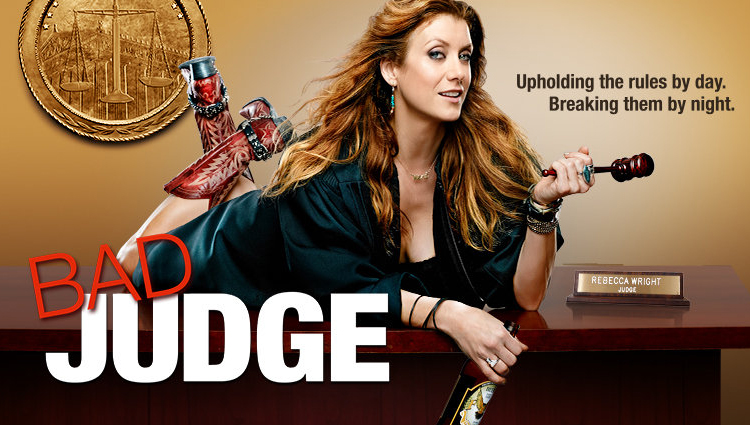
NBC’s dedication to create a comedy “hit” has resulted in a long line of one-season blunders. Rather than try and build something that would at the very least command some respect, NBC aimed low (“Not low enough,” Chuck Lorre said, laughing atop his pile of money.) The premises for these shows are abysmal. It’s confounding that anyone thought it would make a good television show. To name a few, in alphabetical order: 1600 Penn (“What if a dysfunctional family…” a young, hopeful writer said. “Lived in the White House?”), Animal Practice (“It’s like Scrubs, but with a monkey!”), Bad Judge (“What if there was a hard partying, tough-as-nails judge…that was a GIRL?!”), Free Agents (“What if two PR executives divorce something something Hank Azaria?”). You get the idea.

bad-judge

Look, networks fuck up all the time. They order terrible pilots to series. It’s been this way for a very long time. But NBC’s dedication to consistent failure has a lot to do with their quest for ratings – their desire to create a “hit” on the scale of The Big Bang Theory, or perhaps make it 1997 again through science or magic [1]. But in the fractured landscape of television viewing, hits are becoming increasingly rare. It’s become impossible to predict [2] what will become a ratings giant. The best you can hope for is a lineup that NBC had; the one seen above. The low rated[3] misfit shows breaking the mold for what single-camera comedy could be after Arrested Development set sail.

Continue reading The Conclusion of Parks and Recreation Marks the End of an Empire

A Music and Text Analysis of Franz Schubert’s Winterreise

Franz Schubert’s vocal cycle Winterreise, tells the story of a man who has embarked on a long winters journey. All twenty-four pieces in the song cycle share similar themes, metaphors, and central conflicts. Two pieces in particular are Rast (Rest) and Einsamkeit (Solitude). The narrator is weak, torn, and mentally unstable for his travels. He longs for true love, but winter’s sorrow has taken its toll. Therefore, these two works are related to one another through the analysis of text, key signature, and central metaphor.

Rast is the tenth song in Winterreise and is in strophic form. The piece is set in the key of D minor and the A section consists of two similar phrases. The a phrase concludes with a perfect authentic cadence (m.10) and is followed by the a which changes tonality with a perfect authentic cadence in the key of F major (m.15). These two phrases share a special relationship with the text. The cadence that occurs in both of these phrases occurs on a word that depicts struggle and travel. The a phrase ends on “Da ich zur Ruh mich lege” (as I to the sleep myself lie down) and the a phase ends on “Auf unwirtbarem Wege” (on inhospitable paths). The a phrase cadence depicts how slowed down, worn out, and frazzled the narrator is from his travel. A’ talks of how his travels prevent him from sleeping. His thoughts of longing for true love keep him unsettled during his time of rest. The use of F major puts much weight on his feelings of sorrow and loneliness. The B section consists of six small phrases. The a phrase ends with a perfect authentic cadence in G major (m.18), the b phrase ends with a perfect authentic cadence in F major (m.20), the c phrase ends on a half cadence in the tonic key of D minor (m.22), the d phrase has a perfect authentic cadence (m.25), the cphrase has a half cadence (m.28), and the dphrase concludes with a perfect authentic cadence (m.31). The A and B section return and follow the same phrase structure.

Shubert uses an example of an unsung voice in the phrase “doch meine Glieder ruhn nicht aus, So brennen ihre Wunden” (yet my limbs rest not so burn their bruises) (m.42-45). The vocal melody and the piano are playing a very calm and melodic passage. The text gives off the impression that the narrator is not content with his aching body, ultimately giving into his sorrow. The narrator lacks motivation to go on and has given up. Schubert also uses an example of word painting by using contrasting phrases and dynamics. The phrase “Fühlst in der Still’ erst deunen Wurm/Mit heissen Stich sich regent” (feel in its stillness the serpent stir with its hot sting!) demonstrates this. The first half of the phrase (m.57-58) talks of how the narrator is able to feel a serpent on his body. The music during this is calm and peaceful. When the narrator feels the hot sting of the serpent, the music becomes more intense. This dramatic effect puts an emphasis on the narrators overall emotional well being. The narrator seems to have a lot doubt surrounding his own strength. He does not put up a very strong fight to change his situation, rather just accepts his loneliness and despair.  Continue reading A Music and Text Analysis of Franz Schubert’s Winterreise

The Belated, But Pre-Oscars, Top 10 Films of 2014

1. Birdman or (The Unexpected Virtue of Ignorance)

Birdman opens with a levitating cross-legged Riggan Thompson (Michael Keaton) being heckled by the Luciferian voice of his former role as Birdman. Throughout the film, Birdman revisits Riggan, stroking his ego and egging him on to return to his superhero form. “You tower over these theater douchebags. You’re a movie star… You are a god.” All the while Riggan is determined to validate himself as an actor—as an artist—with his Broadway production, an adaptation of Raymond Carver’s What We Talk About When We Talk About Love. Riggan is not only the star of the production but also the director and the writer.

When a stage light falls on the key supporting actor’s head, Riggan is forced to re-cast. He rattles off a list of Hollywood stars to his agent Jake (Zach Galifianakis); Jeremy Renner? He’s an Avenger. Fassbender? Doing X-Men. Each proposed substitute is involved in the same buttered-popcorn-franchise-blockbusters that cast a shadow on Riggan’s life. That’s when revered thespian Mike Shiner, played ferociously by Edward Norton, appears. If Birdman is the preacher of fame and worship, Shiner is the pope of artistic integrity. Shiner is a method actor who drinks real gin during a dinner scene, and attempts to have actual sex with Lesley (Naomi Watts) during a bedroom scene, all in front of a live audience. Emblematically, without an audience Shiner is impotent. All the world’s a stage, right?

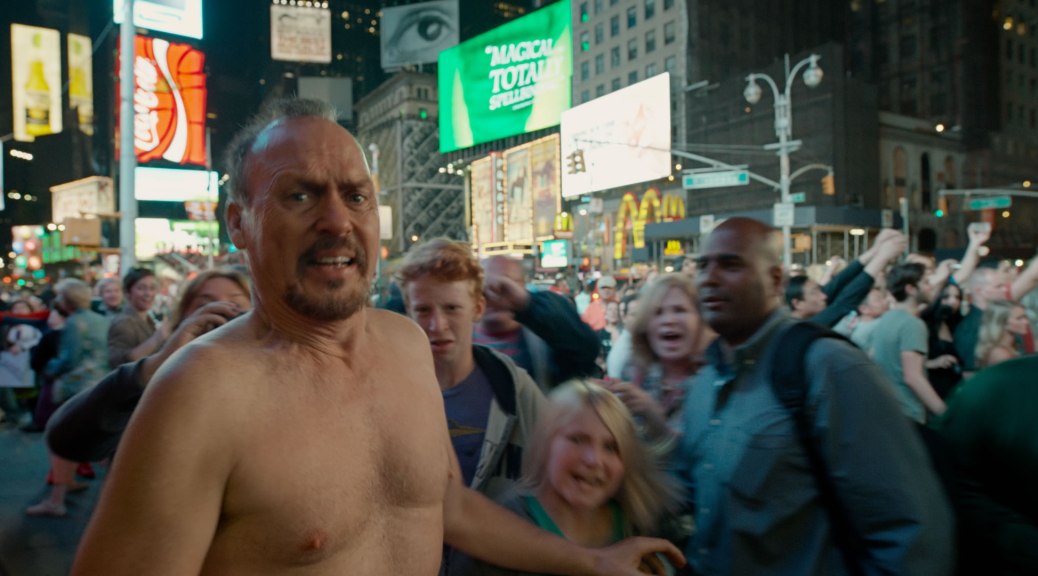
The war between reality and fantasy has been waged. Alone, Riggan performs feats of levitation and telekinesis. Sending lamps and shelves crashing with a flick of his wrist, soaring through the New York cityscape, and even blowing up a car as he walks by. Birdman is a surrealist painting begging you to believe it’s real. And you may give in. Director Alejandro González Iñárritu leaves conflicting clues whether Riggan really possesses superpowers and what is really real. Conspicuous shots of fiery objects streaking through the atmosphere, the film’s score physically manifesting itself, and powers becoming moot once a peer enters the room. It’s a profoundly funny bending of meta-reality, but it’s also subtle when it needs to be. The concept is kept at bay, playing a supporting role to Riggan’s struggle with redemption and relevancy in both the art and the family he fell in love with. He struggles to mend familial relationships between his ex-wife Sylvia (Amy Ryan) and his fresh-out-of-rehab daughter Sam (who is also his assistant, played fearlessly by Emma Stone) that his former Hollywood ego left bruised and neglected. With Birdman Iñárritu manages to grasp at tangible themes like self-acceptance and relevancy and turn them into a lucid, trippy tour-de-force. This is hard to imagine coming from a director known for exhausting non-linear opacity and bleak meditations. Not to mention, it’s so god damn funny! Where has this guy been?! At one point alter ego Birdman taunts, “People, they love blood. They love action. Not this talky, depressing, philosophical bullshit.” You get it.

Continue reading The Belated, But Pre-Oscars, Top 10 Films of 2014

The Blizzard

The Blizzard

“Bethany! Bethany!” The doctor called down the hall to the nurse.

“Dr. Meechim, yes?”

“Can you page Dr. Schultz and have him look over Ms. Cortez’s file. Her temperature and her chest pains make me think pneumonia.”

“Where are you going Dr. Meechim?”

“Did you hear the weather report? Collins County is going to get four feet of snow tonight.”

“I heard. We all heard.”

“Well, I have got to get home to my family. Please, just give Dr. Schultz the file and have him keep an eye on her. Pneumonia. Tell him I think that she has pneumonia.” Dr. Meechim wasted not one second as he turned to gather his coat and hat.

“I’ll tell Dr. Schultz, but I already know he has a full roster tonight.” Dr. Meechim began to walk down the hall towards the elevator. “He is going to rip me a new one, Dr. Meechim.”

“I’ll make sure that he does no such thing.” Dr. Meechim called back before he entered the elevator.

~

“That was Ashley on the phone,” Dr. Meechim walked back into his kitchen.

“What time is the next available flight?” Cynthia Meechim, the Doctor’s wife asked.

“The storm last night shut everything down. She’ll be stuck in Detroit for at least the next twenty-four hours.”

“Gosh, I hope she stays warm.”

“She’s in an airport, honey. They have a Tim Horton’s and gift shops that sell neck rests at every terminal.”

“I’m just glad you got in when you did. I couldn’t imagine if you were stuck at the hospital for the entire weekend.”

Cynthia cleared the breakfast table just as the Doctor reached for more bacon.

“I could imagine.”

“Where is Ashley?” Walking into the kitchen with his hockey skates over his shoulder and stick at waist level was Connor. He is the Doctor and Cynthia’s youngest child.

Continue reading The Blizzard

Do You Even Act Rationally Bro?

Do You Even Act Rationally Bro?

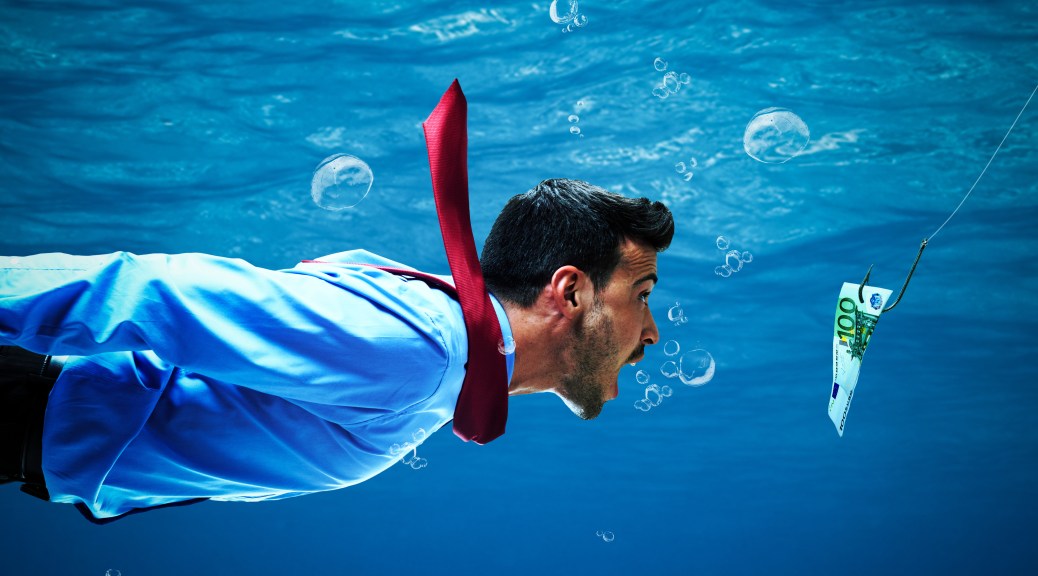
If you have taken an introductory economics class, you learn that the world is made up of rational human beings trying to allocate scarce resources. In essence, people demand goods that have a limited supply. Where demand meets price is where we get the equilibrium quantity and price. What this classic model fails to notice is that people are fucked. It also fails to recognize that people are sometimes irrationally good. In the three sections of this article, I will discuss the areas where the classic view of economics is not sufficient. In essence, this article is a quick overview of some basic concepts in behavioral economics.

Thats Not Ethical, Man

If you solely accept the simple principle of supply and demand as your over-arching market compass, you may be a giant dick. Under this view, you would be okay with a hardware store increasing the price of snow shovels the morning after a large snowstorm. In that, the snowstorm increased demand and due to that increase, price should shift upward. Behavioral economists Daniel Kahneman, Jack Knetch, and Richard Thaler proposed this scenario in a survey to individuals asking if it was fair. 82% of respondents answered that the price hike was unfair. So although theoretically the storm increased demand for snow it did not increase peoples willingness to pay because they see the price increase as unjustified and therefore unfair.

So, if it isn’t just simple supply and demand that dictates price and profit, then what does? The answer involves a little sociology my friends, in that social norms dictate community standards of fairness. Ernst Fehr believes a social norm has three parts:

  • It is a behavioral regularity; that is
  • Based on a socially shared belief of how one ought to behave; which triggers
  • The enforcement of the prescribed behavior by informal social sanctions.

So what have us wealth thirsty capitalists defined as fairness in the application to price, rent and wage setting? “A relevant precedent that is characterized by reference price or wage.” Da Fuq?!?!? No, it really is quite simple and is known as the principle of dual entitlement. The basic idea is that, transactors have an entitlement to the terms of the reference transaction and firms are entitled to their reference profit. This means a firm is not allowed to increase its profits by arbitrarily violating the entitlement of its transactors to the reference price, rent, or wage. So raising the price of snow shovels after a storm is arbitrary, but raising the price of snow shovels because of an increase in cost for the firm would be fair. What are the possible sources of reference transactions? Price, posted price, and previous transactions between a firm and a transactor.

Continue reading Do You Even Act Rationally Bro?

With The Dust Settled, American Sniper Finds Itself In No Man’s Land

Sniper leaves a parable of reactionism in its wake

For the past few weeks, no matter what part of the country you’re from, America has been under attack. We’ve endured a blitzkrieg of mortar-launched articles, think-pieces, tweets, op-eds, Facebook posts, TV rants, reactions, and even challenges, leaving a hazy fog of opinions to settle on the nation. On one side we have the ever-present “war is some badass shit” party. Opposite them resides the up-and-coming “war is like, not chill” party. For every bold countryman who took a shot at American Sniper and its drawling hero, an equally courageous samaritan recoiled and fired back in the reactionary way that one does when a stranger says something about your mother. It was clear there was no common ground to be seen, well, except for the film itself. Have you guys seen the film?

[Gasping for air as I snap out of pun-induced blackout] Ok. Give Clint Eastwood credit for creating a patriotic Iraq War movie that isn’t necessarily pro-war, but not too much credit. Eastwood shies away from making it a wholly anti-war film, and what could have been a damning portrayal of post-9/11 American foreign policy. Instead he articulates Chris Kyle’s red, white, and blue ‘true’ story in shades of grey.

First of all, taking political statements from troops should never be your first choice. I understand there’s a utility to having a first-hand account, but their heads are largely slathered with propaganda. They also are taught a strict adherence to whatever an unseen disciplinary chain of command tells them. These men are not geopolitical analysts; they are soldiers. But that’s neither here nor there; because forming political opinions based on this film is very odd anyway considering it seems deliberately apolitical. There isn’t one mention of the phrase ‘Iraq war’, ‘weapons of mass destruction’, or ‘Saddam Hussein’ and I believe I only heard ‘terrorist’ once. There isn’t a shot of a TV with pundits debating the legitimacy of said war either. Yet, we do see Kyle watching the news as it reports of the 1998 U.S. Embassy bombings in eastern Africa. After seeing this, Kyle enlists in the U.S. Navy looking to “be of service.” The next time we see a TV it’s September 11th, and Kyle and his newly married wife are visibly distraught. Kyle is sent to Iraq immediately after. That’s where it gets tricky.

It’s easy to say that Eastwood is being irresponsible by implying that the invasion of Iraq had anything to do with 9/11. But the truth of the matter is that, for better or worse, this tale is 100% from Chris Kyle’s perspective. Kyle enlisted without an attack on American soil even occurring, so it’s easy to assume he couldn’t have cared less if Saddam Hussein was hiding WMD’s under his totalitarian ‘stache. It was America time. War o’clock. Gun hour? Whatever. It’s a film adaptation of an autobiography, and Eastwood takes that very literally. ‘Don’t shoot the messenger’, Clint says (for the first time in his life). All complaints regarding humanitarian faux pas are to be forwarded to the residence of Mr. Christopher Kyle, punk.

Continue reading With The Dust Settled, American Sniper Finds Itself In No Man’s Land