
Netflix’s big splash into original films is a movie about the loss of innocence
There are a lot of ways this could be answered, particularly because there are a lot of ways it could be asked. What Netflix’s first bonafide Oscar launch attempt means for the future of film distribution, for opportunistic auteurs, or for big studios and multiplexes. A lot of that is boring and almost all of it is speculative. Online streaming sites and apps will only be able to create more and more quality TV and films for the foreseeable future; that much we know. Beasts alternative release plan of simultaneous theatrical and online release was enough of a rebellion from status quo for major U.S. theatre chains such as AMC and Regal to boycott the film. Thus, the $6 million dollar film made less than $60,000 at the box office – but that pain is eased by the reported $12 million Netflix forked over for distribution rights. It’s hard to say how much of, if at all, a thorn in the side of Hollywood this trend could be. Frankly, I don’t actually care. On the other hand, Beasts of No Nation may be the shot that’s ending a cinematic cold war.
Beasts director, writer, co-producer, and cinematographer Cary Fukunaga, who you may remember as the director of that one good season of True Detective (ahh, memories), has a knack for gorgeous images. In fact, most of his resume is work as cinematographer on short films and documentaries. So it comes as no surprise that Beasts of No Nation is a hearty buffet of vividly colored frames. In those frames is, most notably Idris Elba, as the ‘Commandant’ of the rebel militia that captures our young Agu (played by Ghanian actor Abraham Attah) after his father and brother are killed trying to escape the government troops. Elba’s Commandant assumes Agu’s father’s figure as he shapes him into one of the many child-warriors in his battalion. Agu is conditioned with violence and brainwashed with wartime rhetoric. He witnesses unspeakable cruelty and is the victim of heinous acts. Through these ordeals we begin to understand the lust for killing brewing in these children as a natural reaction to trauma. After his Commandant who he had begun to trust and admire, sexually assaults Agu, squeezing a trigger and screaming feels almost therapeutic. This is the films greatest triumph; humanizing the warped mind. 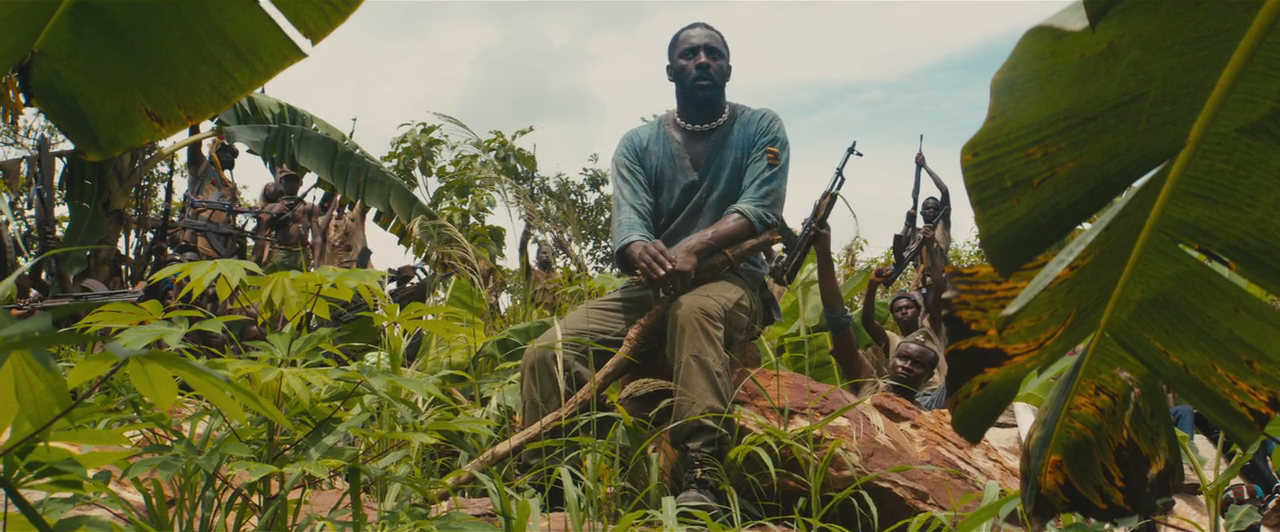
Beasts location in Africa is kept completely anonymous and despite criticism for it painting Africa with a violent generalization, artistically it’s a very defendable move. The anonymity helps immerse us in Agu’s innocent perspective. To a child it matters not what sovereign nation they are in or fighting. They have no choice or say in the matter and are more or less blind to politics. What matters to them is simply surviving, family, and happiness. Even the grass and fauna is well above Agu’s head, it makes sense that his perspective of the war would not be greater. The lack of context for the atrocities creates a vacuum of nihilism for there is no purpose, only victims.
However, without context it can be hard to find drama. We have stakes: its life and death of both bodies and minds – but after they are destructed again and again, the outcome of each moment becomes predicable and we lose the dramatic pull. Other notable African child-soldier films such as Edward Zwick’s Blood Diamond and Kim Nguyen’s War Witch employ clearer objectives. Blood Diamond, which is set in a real war in real country that really happened, is full of narrative drama and purpose to balance us during extreme violence. War Witch bears more similarities because of its lack of specific location, child-centric perspective, and wandering plot-structure. However, the film has several dimensions other than ‘look how awful this all is’ – i.e. young love, grief, and superstition – that help color in around the ongoing horror.
So we’re left with the question, what does Beasts of No Nation mean? Loss of innocence; sure, that’s clear. Anything else? It’s a lot of movie for how little it’s really about. It may be artsier than its genre peers and produce a more virulent message on creating child soldiers but it’s not like anyone was going to bat for them, right? Beast’s wanting narrative makes the strongest parts of the film feel like a patient character study, and the weaker like a vague exercise in shock. After the first act there is more of the latter than former. It’s a film that’s easy to admire but hard to embrace. After, I’m left with an empty feeling. It lacks weight, somehow. Nonetheless, I feel compelled to give Fukunaga the benefit of the doubt on a lot of this for some reason. As if my expectations, or Fukunaga’s aspirations were too high. I remember how familiar and honest Agu felt, and how vibrant the jungle seemed – it’s just a shame that I have to bushwhack through all these weeds to see it. 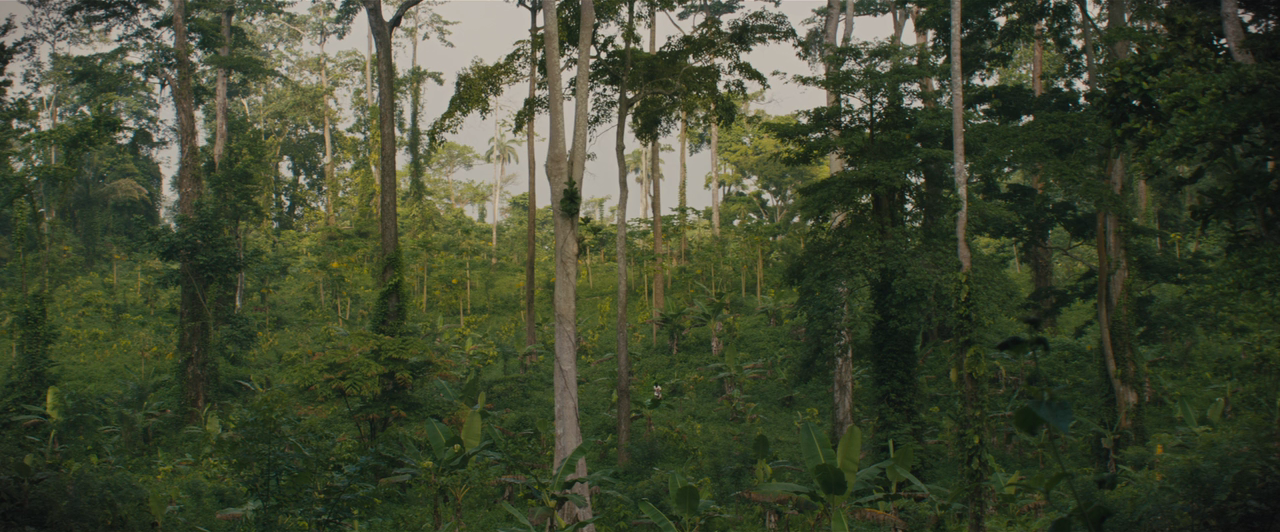
 The Post-Academy